
On Meadowsweet
An Irish Food Calendar

Meadowsweet belongs to the wet places of the late Irish summer. The ditches and the drains. The river banks. On the edge of the boggy fields of Offaly, or indeed among the damp meadows of Galway City and environs.
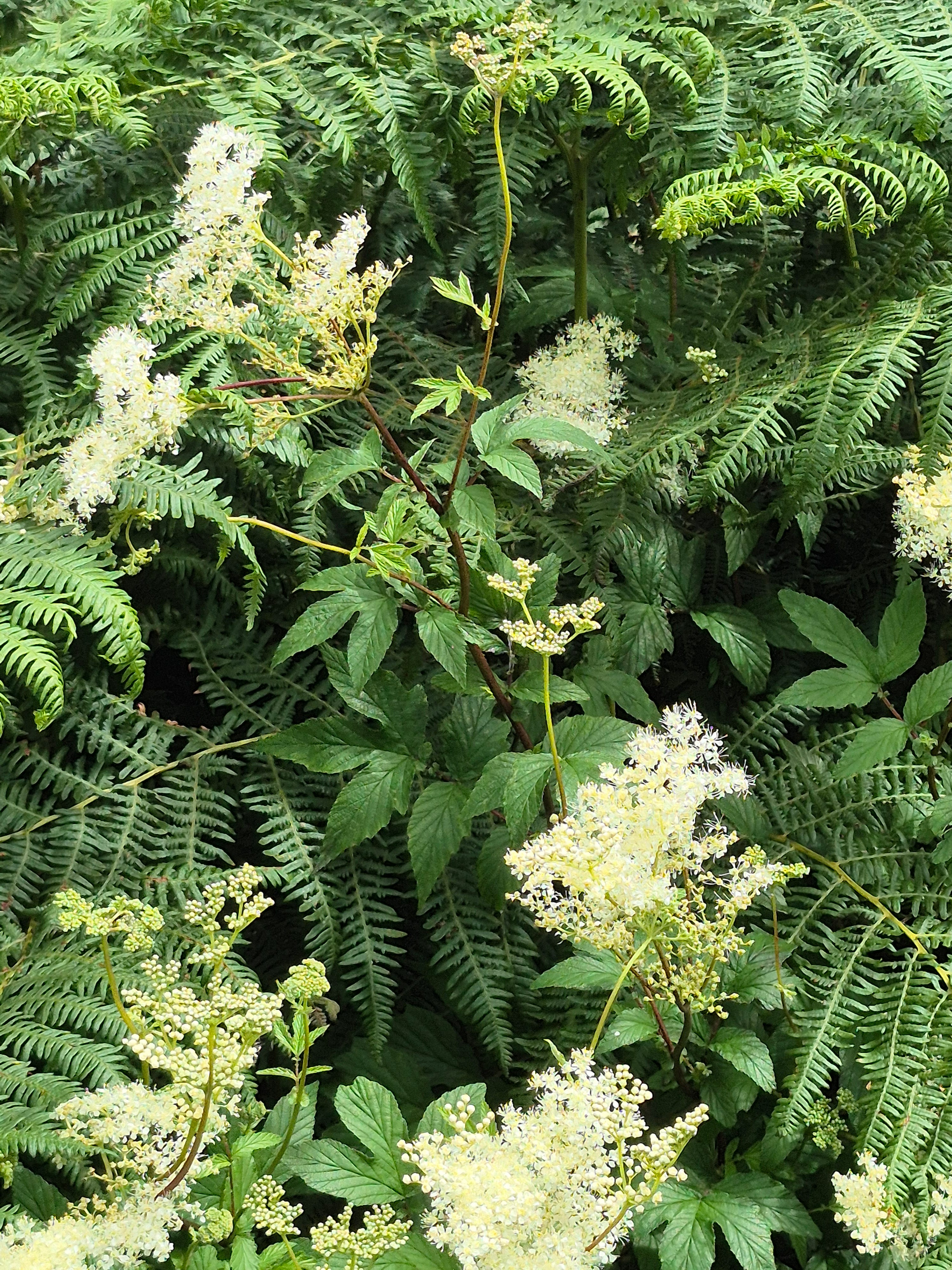
Its Irish name, airgead luachra, is often translated as “silver rush” or “rush silver”, a name that seems to come from the pale underside of the leaf as much as from the way the plant shines above the wet grass.
It flowers from June into September, sending up reddish stems topped with creamy, frothy blossoms. It smells of almond, honey, and hay, as well as medicine and old country cottages.
It is one of those plants that seems to belong half to the field and half to the house.
Its place in the Irish food calendar becomes clearest at the end of July. In the Dúchas Schools’ Collection, one account from Galway records that on “Domhnach a’ Chrom Dubh” (the last Sunday of July) people scattered the white flowers of meadowsweet across the floors of their houses (The Schools’ Collection, Volume 0064, Page 014).
This is a beautiful and rare seasonal detail were the plant is not only being eaten.
It is part of the domestic ritual of the year (the same was done with woodruff). It is brought from the meadow into the house and spread underfoot. The white flowers are allowed to scent the room as the years turns toward the first harvest. The last Sunday of July stands close to Lúnasa, the first-fruits festival, and meadowsweet becomes one of the plants that marks this major threshold in the old Irish year. Summer is at its fullest, but the harvest is not yet gathered. In a way, it was the house opening to the fragrance and the flavour of the field.
This scattering of flowers also reminds us that food culture is not only made from what we put in our mouths. It is made from what perfumes a room, sweetens a drink, or cures a pain.
Meadowsweet is an aromatic compound as well as an ingredient. It belongs to the older domestic world of strewing herbs across the cottage floor. These plants sweeten damp houses, mask animal smells, and brought freshness indoors. Before modern disinfectants and air fresheners, houses were scented with herbs and flowers. In this sense, meadowsweet was part of the invisible architecture of the home. It cleaned the air that people had to share with cows and pigs that might wander into the hose at any time.
The Dúchas material also gives meadowsweet a definite place in Irish folk medicine. In Lisdoonan, County Monaghan, it was recorded as “a herb for dropsy and kidney trouble” and “excellent for diarrhoea in children” (The Schools’ Collection, Volume 0930, Page 150).
In Pallasgreen, County Limerick, it was said to be good for many maladies. For the young Philip Gleeson writing in 1938:
Meadow-Sweet, which grows in meadows in the month of May is said to be very good for Rheumatism. The plant must be pulled and dried and then let stand for some time in boiling water. When the juice of the plant has got into the water people may drink it and cure their Rheumatism (The Schools’ Collection, Volume 0518, Page 191).
These and other accounts demonstrate how the plant lived in ordinary and everyday knowledge. It was not a botanical curiosity, as it is for many of us today, but something known by local healers as well as the community at large. It therefore belonged to the medicine chest of Irish food.
The medicinal reputation of meadowsweet bears a scientific echo. The plant contains salicylate compounds, and in the nineteenth century chemists investigated meadowsweet, then classified under Spiraea. This investigation eventually led toward the creation of common pain killer aspirin. It would be too simple to say that aspirin comes directly from meadowsweet. Plants such as meadowsweet helped shape modern pain relief and anti-inflammatory medicine as we can see in folk literature. This gives the plant a curious double life. It is an old folk remedy, but also part of the story of modern pharmacology.
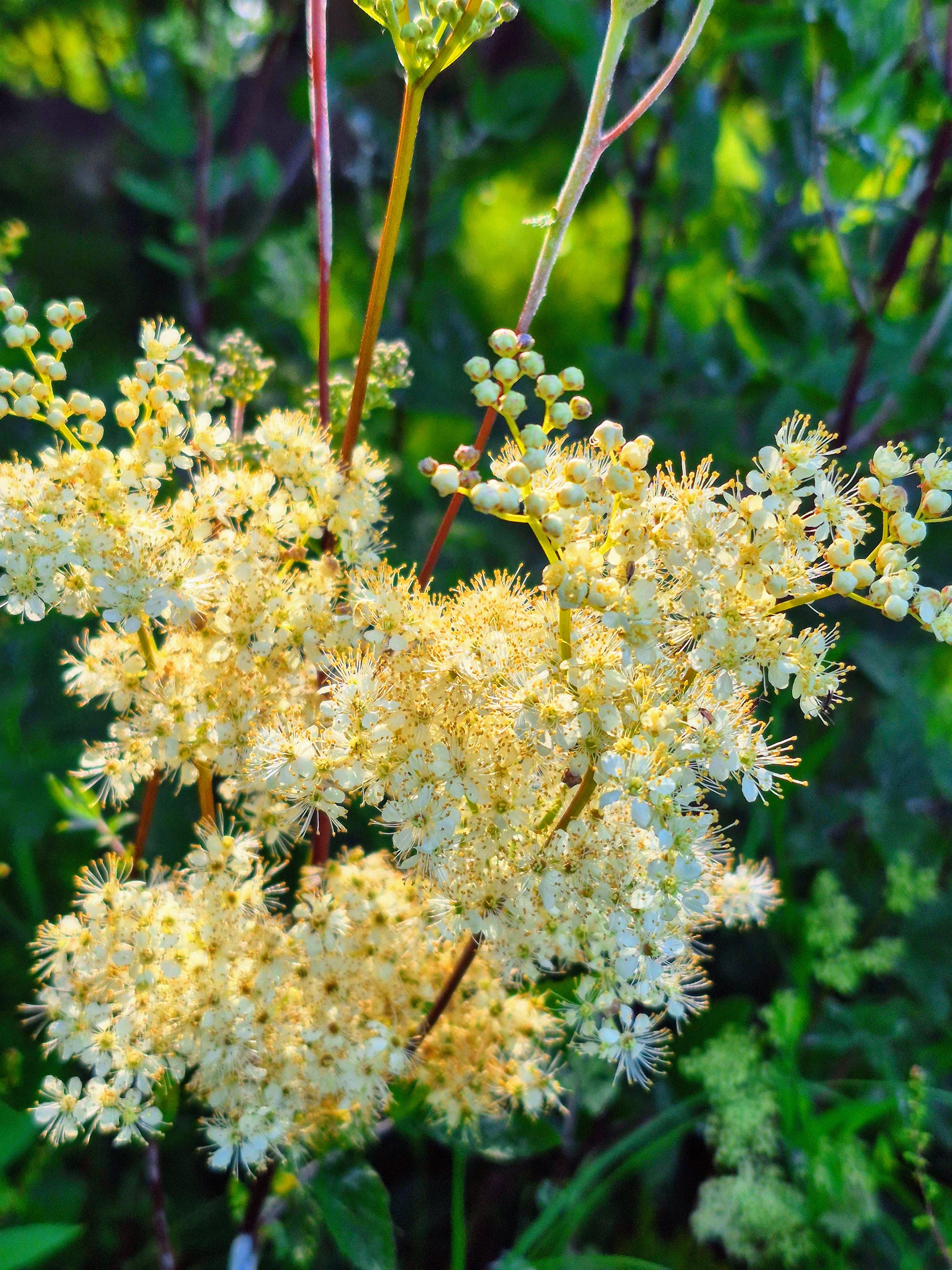
Its older English name, meadwort or meadsweet, points to one of its other culinary associations. That is, the flavouring of fermented drinks. The modern name “meadowsweet” is sometimes misread as meaning a sweet plant of the meadow, but its older sense is closer to a herb that sweetened or scented the honey based drink mead. This connection places it in a long European tradition of aromatic plants used before hops became dominant in brewing, especially in Ireland. Meadowsweet brings a soft bitter-almond note, a faint wintergreen quality and a honeyed sweetness without being sweet.
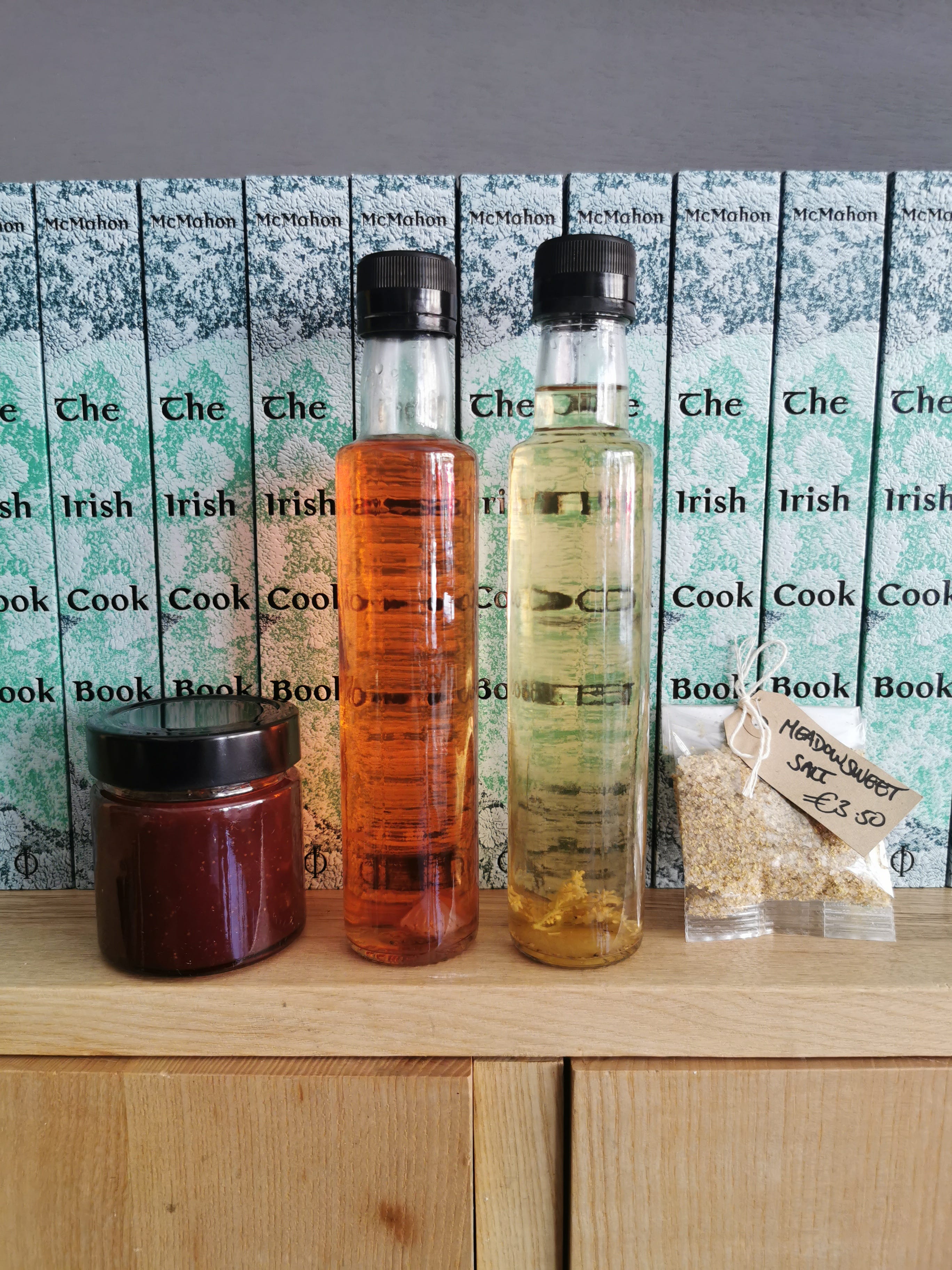
Culinarily, meadowsweet is most useful when infused into fat, sugar, salt and alcohol/vinegar. Though too much heat can ruin its gentle perfume, pulling out a harsher medicinal bitterness. When dried, it works beautifully with dairy in Aniar. From custards to ice-cream, meadowsweet is our replacement for vanilla in our all Irish kitchen. It complements gooseberries, as well as brown butter oats. In savoury cooking, it can lift shellfish and white fish such as turbot or cod. Just think of a meadowsweet butter sauce split with chicken fat accompanying a plate of freshly picked and cooked girolles.
For an Irish food calendar, meadowsweet belongs to that moment when summer is full but still fresh to our mouths and minds. The new potatoes are being lifted, strawberries are disappearing from roadside stalls, the elderflower is fading, and the first mushrooms begin to appear after warm rain.
The plant stands at the hinge between bloom and harvest, at the entrance to Lúnasa. It reminds us that seasonality is atmosphere as much as eating. So the next time you find yourself out in a damp field, try and catch the sweet almond scent of these yellow flowers.
They carry the memory of old cures, of bygone cottages, and future culinary endeavours filled with the breath of the Irish meadow.
Yours in Irish Food,
Jp.
1st July, 2026.
So thrilled you covered this! I adore it! Sending telepathic highfives from Dublin
Beautifully written. I can smell its heady scent from those words.