
Spruce Tips and Pine Cones
The Making of New Food Traditions in Irish Food Culture

There are some foods in the Irish landscape that arrive without much folklore attached to them. They do not come to us with a long trail of Dúchas stories, with the usual charms, cures, and warnings. They are not always named in the old food histories. They sit outside the familiar calendar of traditional Irish food such as milk, butter, potatoes, and oats. Spruce tips are one of these food stuff that seems to have passed us by in Ireland.
In late spring, at the end of the branches, the spruce sends out its new growth. It is soft and pale green, appearing almost luminous against the older dark needles of the previous year. These young tips are tender enough to eat. They have the sharpness of citrus peel, the sweetness of new grass, and the resinous depth of the forest. Orange zest in the Irish countryside was one of my first observations after tasting these tips straight from the tree somewhere in Roscommon. After orange, comes rosemary, and then resin. A touch of tannin.
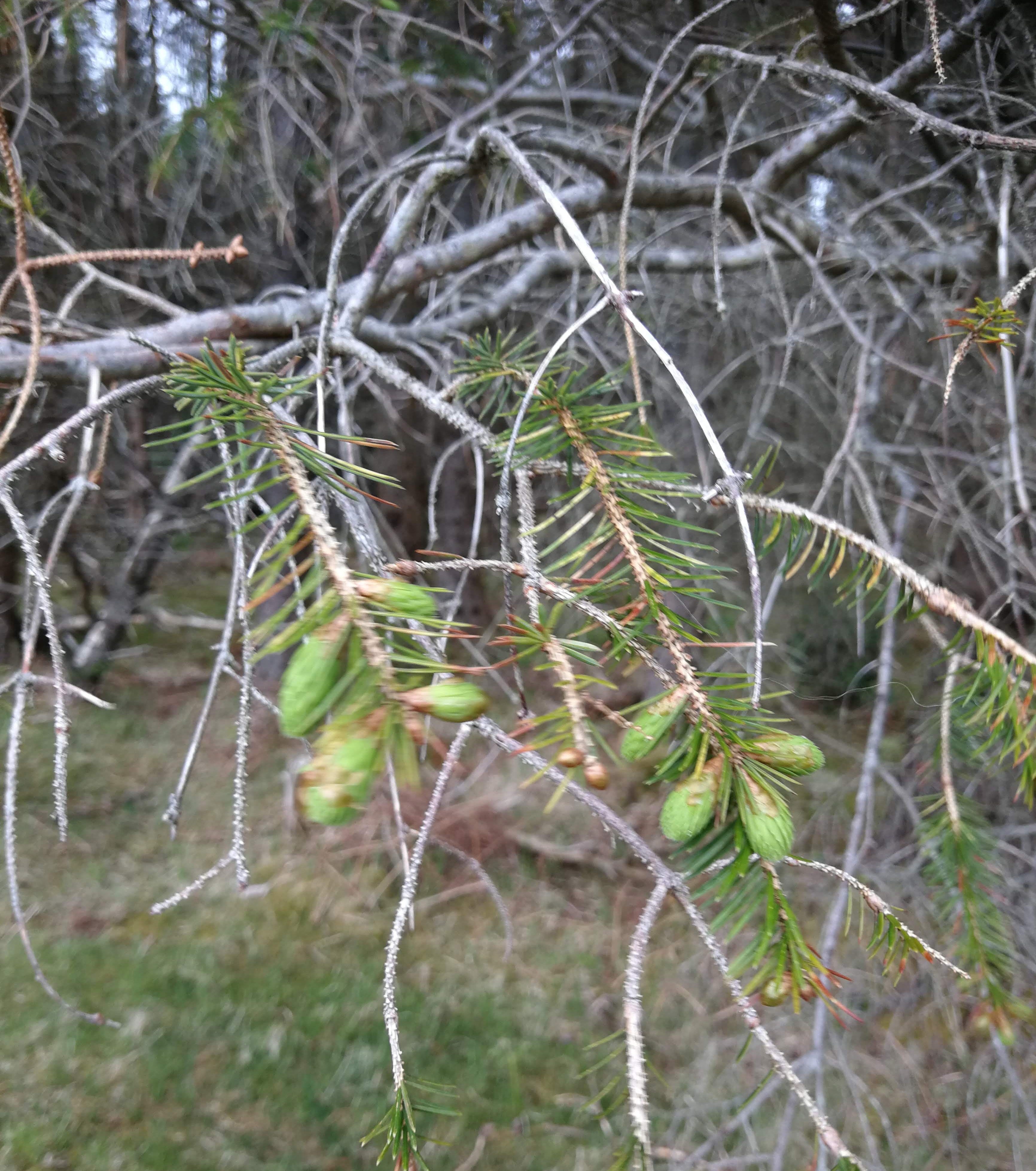
If you catch them at the right moment, before they toughen, they seem to belong naturally to the early Irish summer, even if they have not yet found their place in the older record. Perhaps this is how new food traditions begin.
Ireland has always made use of the edges of things. From our hedgerows and shorelines, bogs and fields, ditches and riverbanks, we have eaten always what was practical and seasonal. But modern Irish cooking has also had to learn how to look again at its own landscape. Not everything worth eating comes already sanctified by folklore of years of tradition. Not every food moment begins in the distant past. Sometimes it begins when a cook notices a flavour in the landscape and returns to it, year after year, until it becomes part of a practice.
If Ireland offers little obvious folk record for spruce tips, the Nordic countries offer a way of thinking about them. In Finland, the young green shoots of spruce are made into kuusenkerkkäsiirappi, a spruce tip syrup, often used as a sweetener and, in folk practice, as a remedy for coughs and colds. Further north, in Sápmi, Scots pine had an even deeper place in food culture. Its inner bark was harvested in early summer, dried, ground, and used in bread and other foods. This was not simply famine eating, but part of the Finnish people’s broader relationship with the forest. Later, the New Nordic movement transformed these northern practices into a new restaurant language.
The Swedish chef Magnus Nilsson famously utilized pine tree bark in his cuisine at Fäviken, most notably in a dish featuring pine bark cake with preserved egg yolk and spruce ice cream. Others made pine butter, spruce-shoot gels, pickled pine, and cooked young cones in sugar syrup. The forest had become a seasoning. At Aniar, when we pickle spruce tips, steep them in honey, scatter them fresh over raw shellfish, or preserve them in sugar syrup, we are not claiming an ancient Irish custom. We are allowing a northern idea to take root here, in the west of Ireland. This is important to acknowledge, as we need to trace our present practices as well as our past ones.
There is no point assuming just because we have had spruce trees in Ireland, from at least the 16th century onwards, that we ate them.
The influence of the New Nordic movement was, and still is, important to us because it gave Irish chefs permission to treat the local landscape with seriousness. It was not only about edible moss and the smoke of birch branches, though these became the visible grammar of it. At its best, it was about attention to time and place. This is turn led to a renewed interest in preservation of the wild, which was a practice that has fallen foul of modern living. The Nordic Manifesto (2004) showed that the forest could be a larder, not in a romantic or decorative sense, but in a precise culinary one.1
Green pine and spruce could sit beside raw langoustines. Birch sap could become a tasty syrup. Young pine needles could flavour oil or cream and be served with smoked asparagus. Pine cones could be blanched and then cooked for hours in sugar or vinegar until they became soft, fruity, and usually spicy.
This matters in Ireland because our own food history has often been narrated through necessity and famine. We know how to speak about the potato or the pig. We know how to speak about hunger and want. But we are still learning how to speak about our own natural abundance of small wild things. This is not an abundance that exists in the grand potato or barley harvests, but in brief appearances: a wild garlic flower, a hawthorn blossom, or a birch tree running with sap.
In May, at Aniar, spruce tips and young pine cones have become part of that way of seeing. In terms of the tender tips, we pickle them while they are still soft, holding their citric brightness in vinegar for use later in the year. We steep them in honey, where their resinous perfume slowly moves into sweetness over many days at a low heat. We use them fresh over raw shellfish, where their sharpness cuts through the iodine and richness of oysters, scallops, crab, and my favourite, langoustines.
The pastry chef makes syrups with them, capturing that brief May-green flavour before it disappears back into the branch for another year. Regarding the young cones, when still tender, can be treated with sugar, syrup, vinegar, or honey, becoming something between condiment and preserve.
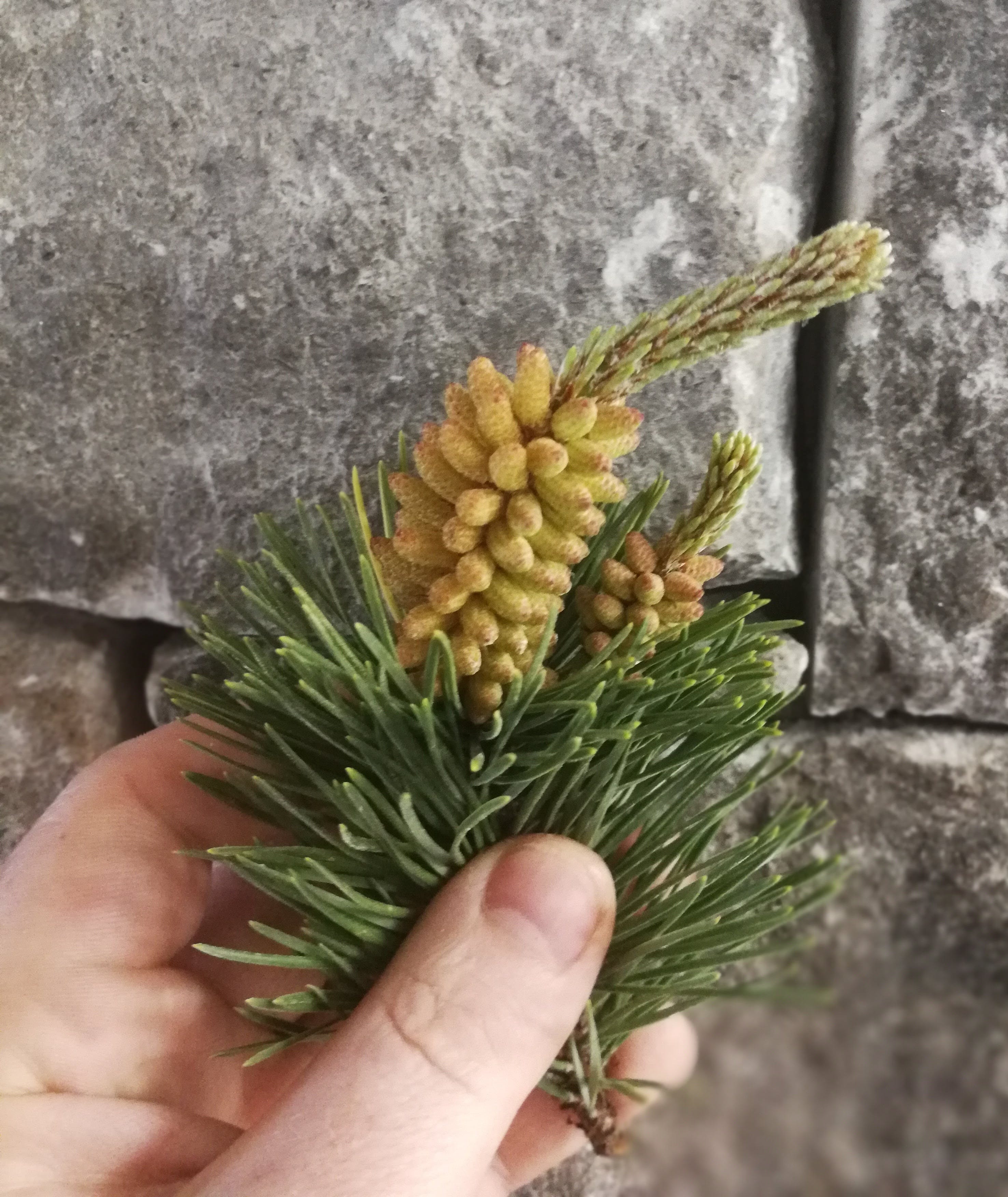
There is a lovely tension in them. They are both ancient and new. Ancient, because trees have always stood around us, releasing scent after rain, marking the edges of fields and roads, darkening the hillsides in winter. Many trees were here before of us. New, because we are only now beginning to use them in this way in Irish cooking culture. They do not carry the same inherited meaning as butter or bread or potatoes. They do not come with a ready-made folk story. But maybe that is what makes them useful. They allow us to see tradition as something alive rather than something fixed. Perhaps in a hundred years, they will have stories of their own from this island.
There is a temptation, when writing about Irish food, to make everything old. To pretend every ingredient has a continuous tradition behind it. But sometimes the more honest thing is to say: this is new. Or rather, this is newly seen. We have no history for is. Spruce tips may not have belonged to the Irish food calendar before, but they can belong to it now. They mark a precise moment in the year: the softening of the forest, the brightening of the branch, and the brief green flare before summer thickens in verdant leafiness.
They remind us that tradition is not a museum. It is a practice. It is made and remade, adapted for elsewhere, and sometimes invented from scratch in a small kitchen in Galway.
In that sense, spruce tips are not outside the Irish food calendar at all. They are part of its future. A small green proof that the calendar is still alive, still growing at the ends of its branches.
Yours in Irish food,
Jp.
11th May, 2026.
The Nordic Manifesto (formally The Nordic Kitchen Manifesto) was created by a group of twelve chef, led by Danish culinary pioneer Claus Meyer, at the Nordic Kitchen Symposium in Copenhagen. The 10-point document outlined a set of principles for a “New Nordic Cuisine” that emphasized sustainability, seasonality, and the use of local ingredients found in one’s natural environment.
Another gorgeous piece, thank you. Your phrasing of "[Spruce tips...] a small green proof that the calendar is still alive" sensitively, respectfully honors Chef Nature as your seasonal culinary expert and source. I'm inspired to consult the seasonal sources in my own landscape and make tradition a living practice.
Beautiful and most interesting. Pine and larch needles are an exceptional source of resveratrol — in addition to those valuable terpenes. Apart from pinecone jelly, fermented kvas drinks from conifer needles have a long tradition in Eastern Europe.