
On Strawberries
Wexford, Wild Fruit, and the Taste of an Irish Summer

There is a certain kind of Irish summer memory that begins on the side of the road.
For me, it is the journey to Wexford with my grandparents sometime in the mi 1980s. The old orange Hunter, heavy with bags and trapped with heat, travels the long road stretching ahead. Then, suddenly, there is the sight of a small roadside stall: punnets of strawberries stacked in the sun, their red bright against cardboard and timber. Placed beside bags of new Irish potatoes, you could almost smell them before the car even stopped. Sweetness and dust, warm plastic and petrol, the promise of the sea somewhere further on down the road.
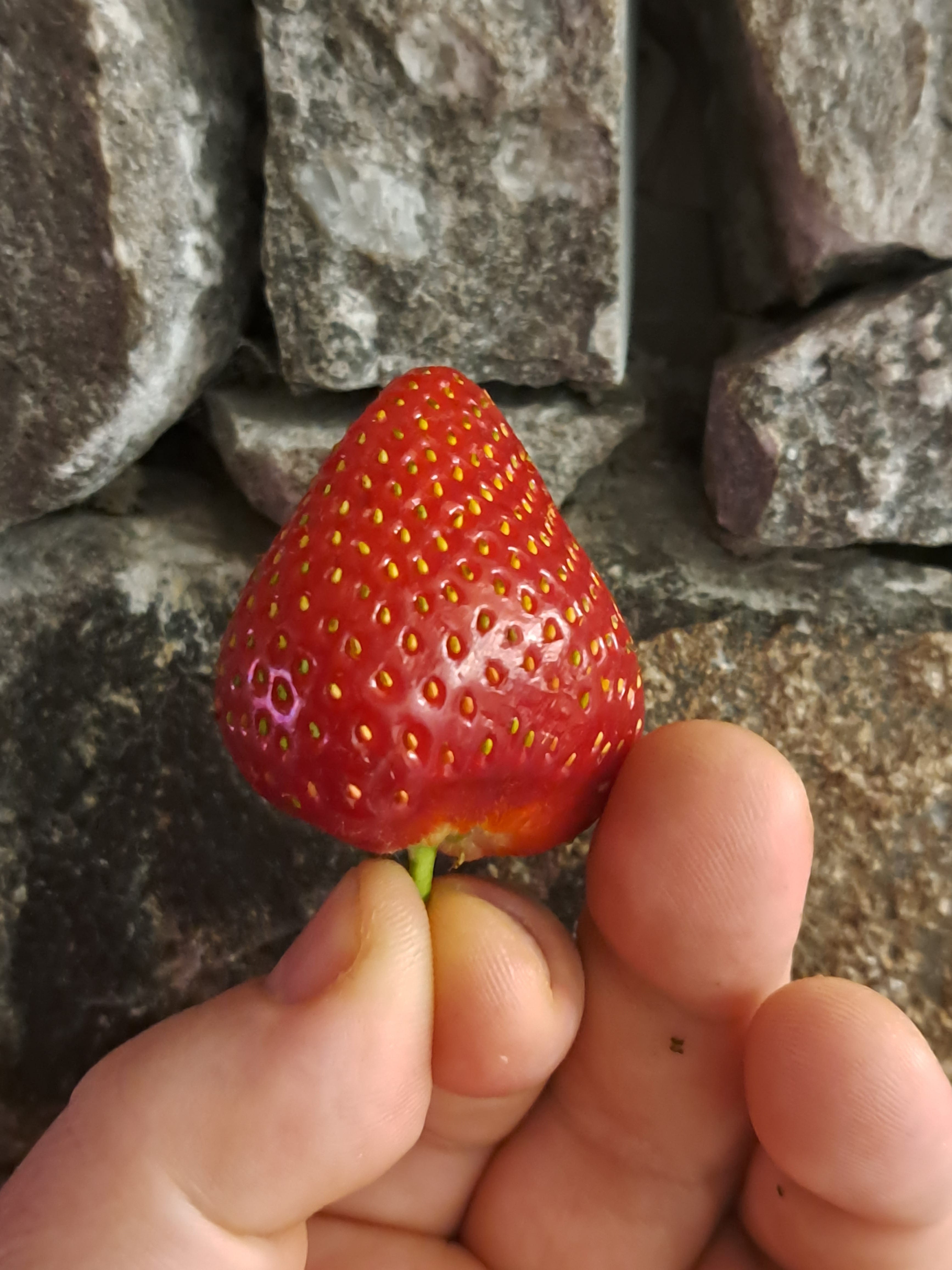
Wexford strawberries were never simply fruit. They were a sign that the Irish summer had properly arrived. They belonged to that ritual of travel before cheap flights and the internet took hold of us as a nation. The stopping and the buying; the instruction not to eat them all before we arrived. Of course, we often ate them anyway. If we were lucky with cheap ice-cream or pouring cream. Some were perfect, others were bruised. Contained within them was the taste of the travel itself, the taste of being a child in between two places, unknown.
In Irish food culture, strawberries occupy a slightly strange position. They are of course beloved, but they do not carry the same mythic weight as blackberries, sloes, hazelnuts or fraughans. They are not central to the great symbolic storehouse of Irish food culture that has been passed down to us through oral and written text. They do not appear in the old seasonal calendar in the way fraughans do at Lúnasa, or butter does around May Day, or apples do at Halloween. The strawberry feels much more modern, more cultivated. It is, in my imagination at least, more associated with roadside stalls, market gardens, jam factories, and the soft-fruit industry of the south-east. And yet, before the punnet and the polytunnel, before the “Wexford strawberries” sign, there was the wild strawberry.
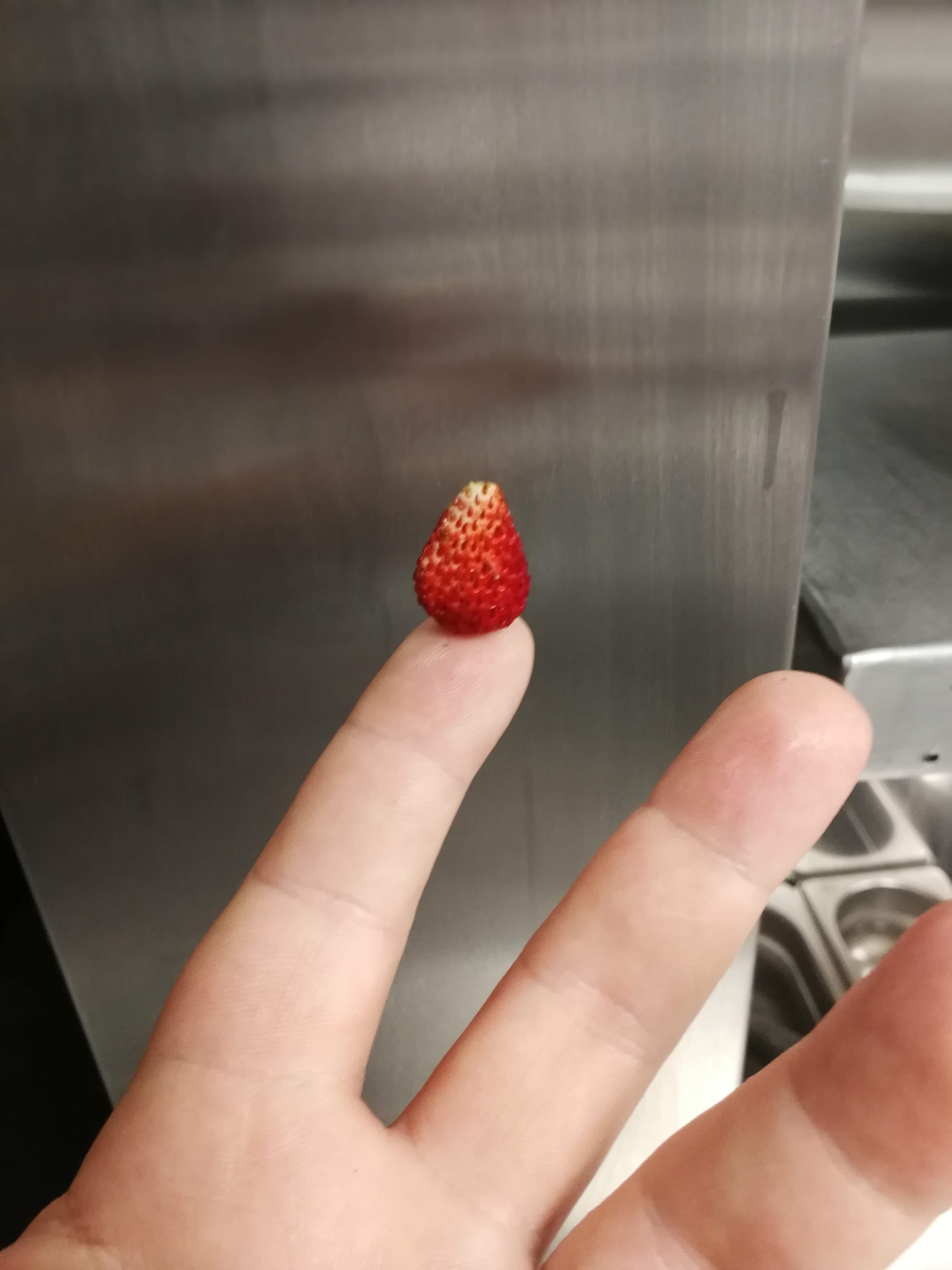
The wild strawberry, Fragaria vesca, is native to Ireland. It is a small plant of hedgerows and woodland edges, of sunny clearings on a mid-summer morn. Its Irish name, Sú talún fhián, is poetic and beautiful. It is often translated as the “juice” or “sap” of the earth. The wild plant flowers from late spring into summer, producing small red fruits with white flowers that are nothing like the large, cultivated strawberries we know now. They are tiny, intense, and fleeting, more perfume than actual substance.
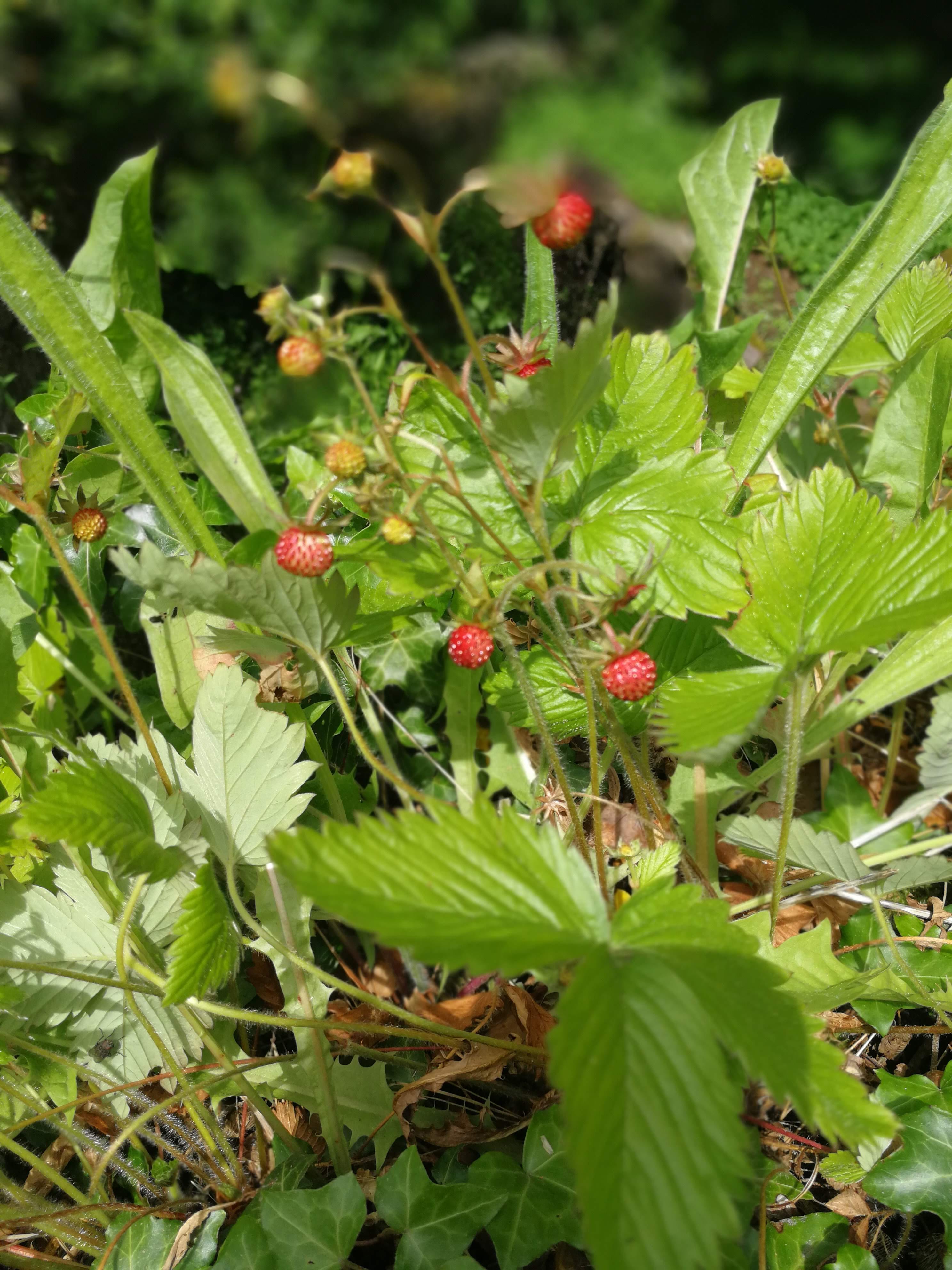
Dúchas entries record wild strawberries being used for local cures and charms:
Wild Strawberry leaves pinned to your clothing is a local cure for nervousness. The leaves are to be found particularly in the spring time growing wild in the ditches (The Schools’ Collection, Volume 0487, Page 491).
However, despite this lack of edible information, to imagine the wild strawberry in Ireland is to imagine a much older food world than all of us on the island. It is one that existed before fields, before grain and the dairy cow became central to the Irish diet. Mesolithic people in Ireland lived by an intimate knowledge of wild food. The fished. They hunted for wild pig and birds, such as mallard. The gathered nuts and seeds, roots and fruits. The strongest Irish archaeological evidence is for hazelnuts and other gathered plant foods rather than strawberries specifically, so it is important not to overstate the case (Mallory 2013). But wild strawberries were part of the edible flora of north-west Europe, and Mesolithic evidence elsewhere shows Fragaria vesca among the wild fruits available to hunter-gatherers. Ireland’s early people certainly lived in a world where such seasonal sweetness mattered, even if it rarely survives clearly in the archaeological record.
This is one of the difficulties of writing Irish food history. The most delicate things often leave the faintest trace. Bones and oyster shells survive. Charred hazelnuts survive. But the strawberry, like much flora, disappears almost as soon as it is picked. It is eaten in the hand. It stains the fingers and then is gone. That is perhaps why the wild strawberry belongs more to memory than to monument in Irish food history.
There are some instances of edibility in the Dúchas Schools’ Collection. One entry from Co. Galway recalls people on long journeys becoming hungry and going into woods to eat wild fruits such as blackberries and wild strawberries (The Schools’ Collection, Volume 0016, Page 453). Another from Co. Kerry places strawberries near a fort, alongside sloes and hurts, in a landscape touched by fairy belief (The Schools’ Collection, Volume 0457, Page 840). These are modest appearances in a vast collection, but that is precisely their value to us now. The wild strawberry enters folklore not as a grand ceremonial food, but as a wayside fruit, a thing of woods and local exchange.
Danaher’s The Year in Ireland (1972) gives us the larger structure within which to place this information. His work is not, as far as I can see, especially concerned with wild food, but with the rhythm of the year: seasonal labour, harvests and fairs, beliefs and superstition, and the old relationship between food and time. Strawberries fit into that rhythm as an early summer threshold ingredient. They arrive after the hunger of spring has passed, before the heavier harvests of Autumn. They are not a staple of Irish food but rather a sign of sweetness in the middle of the year.
The cultivated strawberry, the one we know now, belongs to a different, more recent history. The modern garden strawberry, Fragaria × ananassa, is not the same as the tiny wild strawberry of the ditches. It is a hybrid fruit, enlarged and bred for yield, which traces it roots back to Brittany in the 18th century.
In Ireland, the modern strawberry industry became especially associated with Wexford. Local histories often point to the Second World War as a turning point. With imported fruit restricted, Irish growers expanded domestic production to sell into England. Wexford’s strawberry industry is commonly dated from around 1939, when wartime disruption helped create the conditions for local cultivation.
This is important detail as the Wexford strawberry feels ancient because our childhood memories make it ancient. But as an image of national Irish food, it is relatively modern. It is a twentieth-century fruit tradition that has managed to feel timeless because of the way in which our food memoires manipulate us. That is how food culture works. What begins as necessity becomes trade. What becomes trade becomes habit. What becomes habit becomes memory. And memory, if repeated often enough, becomes heritage. Hence, my nostalgic feelings for country trips to Gory in the summer of 1988.
The roadside strawberry stall is part of that heritage now. It is one of the great informal food architectures of Ireland: a sign, a stack of punnets, and a person sitting under shelter from the sun and rain waiting for cars to pull in. At its peak, Wexford had hundreds of berry growers, with fruit sold at roadside stands and into local markets, mostly for jam-making. Writing in The Irish Times, Russ Parsons notes that Irish strawberry growing expanded during the Second World War, and that Wexford once had more than 1,000 berry growers, supplying markets and food processors such as Chivers (Parsons 2025).
There is a whole social history hidden here: small farms and seasonal Irish labour of women and children, roadside selling and domestic jam-making. Strawberries do not travel easily. That is part of their charm and their problem. They bruise. They collapse. They ferment. They demand speed. A strawberry is a kind of natural clock letting us know that everything changes over time.
Today, the Irish strawberry has moved from the roadside stall to the national supermarket shelf. Keelings, perhaps the most recognisable Irish berry brand, traces its first strawberry planting to 1937 and now uses glasshouses to extend the Irish berry season.
The supermarket strawberry, as opposed to the wild strawberry or the roadside strawberry, allows Irish-grown fruit to reach people who may never pass a Wexford roadside stall. It extends the season and gives the strawberry a place in ordinary weekly shopping of us all. But something is inevitably lost when a fruit of journey and place becomes a product of constant availability for most of the year.
The roadside strawberry tasted of where it was bought, or at least, that how I imagined it. The supermarket strawberry tastes more often of the system that delivers it to us on a weekly basis.
That is not a moral judgement, but a cultural one.
Irish food culture, as all modern food culture, lives in the tension between memory and modernity, between my grandmother’s kitchen in Mount Merrion and the supermarket shelf. The strawberry allows us to see that clearly. On the one side, we have the wild strawberry, tiny and elusive, gathered from banks by people who only knew the landscape through hunger and season. On the other, there is the Wexford punnet, bought on the road with our parents and grandparents, eaten warm and temperate from the stall. Or another still: the branded national berry, grown under glass, distributed across Ireland, available far beyond the old narrow window of the short Irish summer.
All three are Irish food stories worth telling.
At Aniar, the Irish strawberry, both wild and cultivated, asks a series of questions. How do we take something so familiar and return attention to it? We do this by not by making it complicated for the sake of complication, but by remembering its nature and what grows with it.
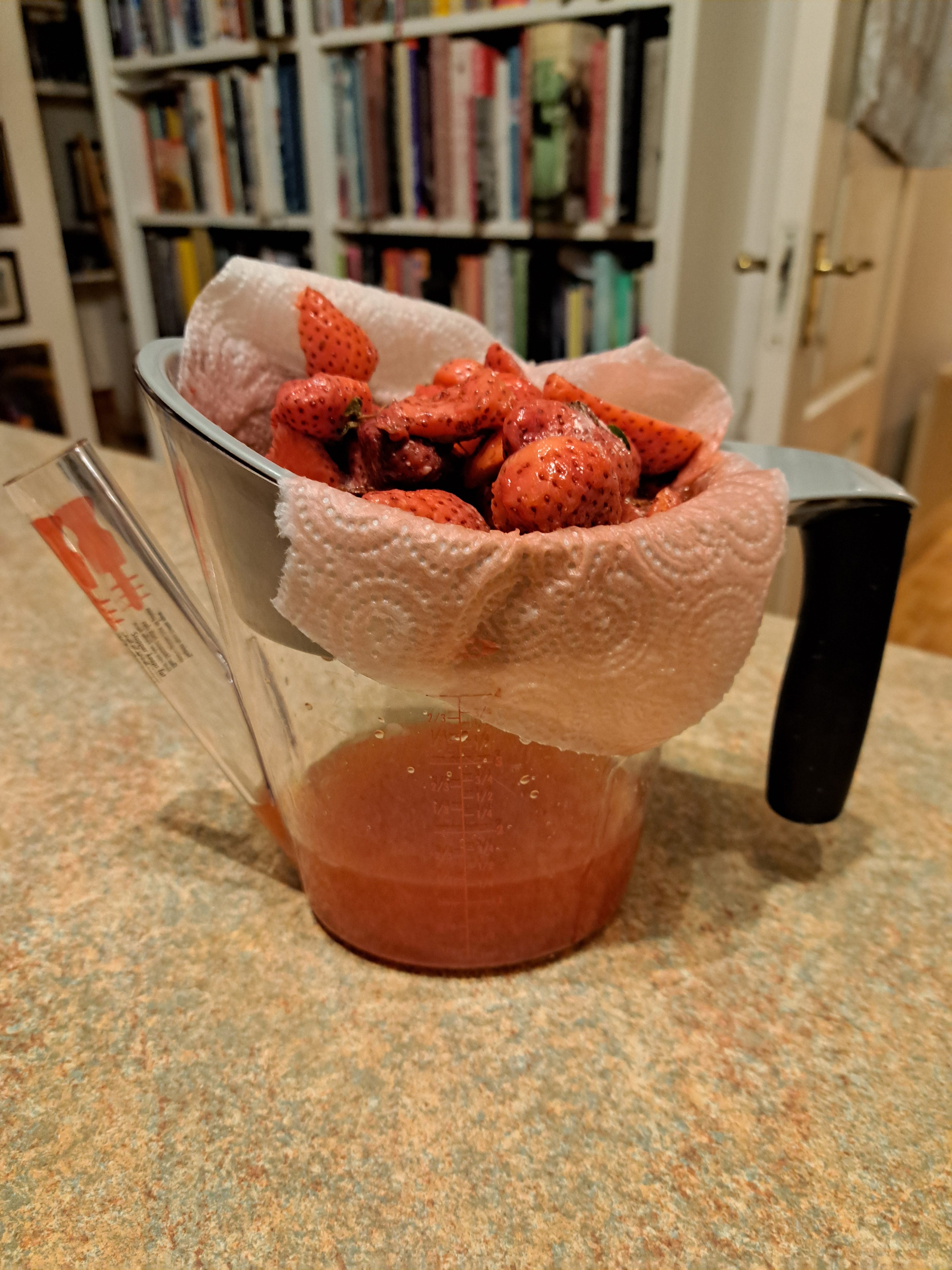
A strawberry has a fragrant perfume but it also carries acidity and sugar mixed with time and memory. It belongs in my childhood mind with cream and vanilla, but now, as adult it is often coupled with a whole host of ingredients from buttermilk to woodruff, elderflower to sweet cicely, from rose to hay and honey and meadowsweet. I could go on. In our minds, strawberries are most often eaten fresh but they can be preserved with vinegar, fermented lightly, dried and turned into a delicious powder, or combined with gin or vodka to make a summer liquor.
The wild strawberry, when we can get it, is different again. It should almost be left alone. A few berries can change a dish more through scent more than flavour. Though this is the rarity nowadays.
Perhaps that is the lesson of the strawberry for the Irish food calendar. It is not one of the great ceremonial foods of Ireland. It does not announce itself with the force of the potato or the pig. It is much smaller than that. It belongs somewhere else, between the roadside and the child’s hand holding it aloft on the backseat of an old orange car.
An Irish strawberry is summer made brief. It is the earth’s red sweetness. It is a fruit that begins in the wild and ends in the supermarket, but somewhere in between it stands on the side of the road in Wexford, waiting for my grandfather’s car to stop.
Strawberries
It stains the fingers
And is gone.
But it not Not gone.
It remains
Where taste remains,
In the mouths
Of our ancient ancestors;
In the child Of Ireland,
Before Ireland Had learned
To call Itself so.
It waits underfoot Close to the earth,
As if the earth Had never thought
Of such a small red thing
With no weight.
It stains the fingers
And is gone.
But it is not gone. It is never gone.
Yours in Irish food,
Jp
25th May, 2026.
So evocative. And so true about Wexford's special status. It brings me back to sitting on the boiling plastic seats of my mother's Renault 4, backs of legs burning but its worth it for the big cardboard punnet of strawberries we are slowly depleting all the way home.
"It belongs somewhere else, between the roadside and the child’s hand holding it aloft on the backseat of an old orange car." perfectly rendered!