
On Forced Rhubarb
The Pink Light of Winter

There is a particular pink that belongs to the end of winter. It is not the blush of apples, nor the stain of winter berries, but rather the almost translucent, electric rose of forced rhubarb. It arrives when the ground is still hard and the hedgerows are stripped bare, when cabbage, turnip, and cauliflower have become the grammar of the season. Forced rhubarb, drawn from the darkness of a shed, interrupts that grammar with a flare of colour and a sharpness that wakes the mouth and points towards the brighter days ahead.
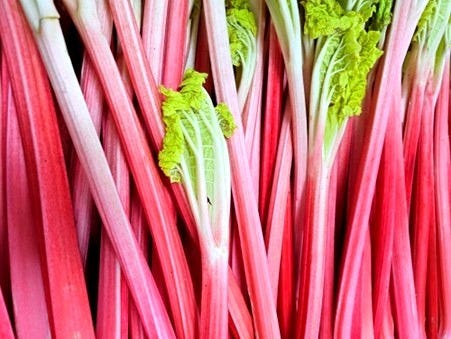
Rhubarb is somewhat of a paradox in the Irish kitchen. Botanically a vegetable, legally classified as a fruit (at least in American tariff law), culturally it is a dessert (though not in Aniar where we love to pickle it and serve it with shellfish). Its name comes from the Latin rheum barbarum, meaning the “barbarian root”. It is a plant that travelled west from Asia along trade routes that predate our own modern culinary borders. Long before it was folded into crumbles and tarts, rhubarb was prized as medicine. Its roots were valued in apothecaries across Europe, including Ireland, for their purgative qualities. Only in the eighteenth and nineteenth centuries, when sugar became more widely available, did the stalk become the sweet-tart pleasure we recognise. It is amazing to think that this fruit/vegetable has a much shorter culinary life than we imagine.
From Garden Patch to Dark Shed
In many Irish gardens, rhubarb is one of the first signs of life. The crowns sit quietly through winter, storing energy in their roots. Left alone, they will push up green, then red stalks in March, April and May. Rhubarb crumble was a early summer favourite of my grandparents generation. Though this wasn’t always the case. As Maura Laverty observes in her seminal Full and Plenty (1960):
When rhubarb was first introduced into these islands, people fought shy of it as an article of food. For many a long day, housewives valued it only for its decorative: a nicely arranged vase of rhubarb stalks with their palmy green and glowing pink lent, they felt, a nice note of colour to the colour to the sideboard (330).
But forced rhubarb is something else entirely.
Forcing is a technique of deprivation. The crowns are lifted in late autumn, traditionally after the first frost, which is said to sweeten the plant by breaking down starches into sugars. They are then placed in dark sheds, or under blackened pots, where no light penetrates. In this absence, the plant stretches. It grows pale and tender, seeking light that never arrives. Harvested by candlelight to prevent exposure, the stalks are thinner, more delicate, and often a deeper pink hue than their field-grown counterparts.
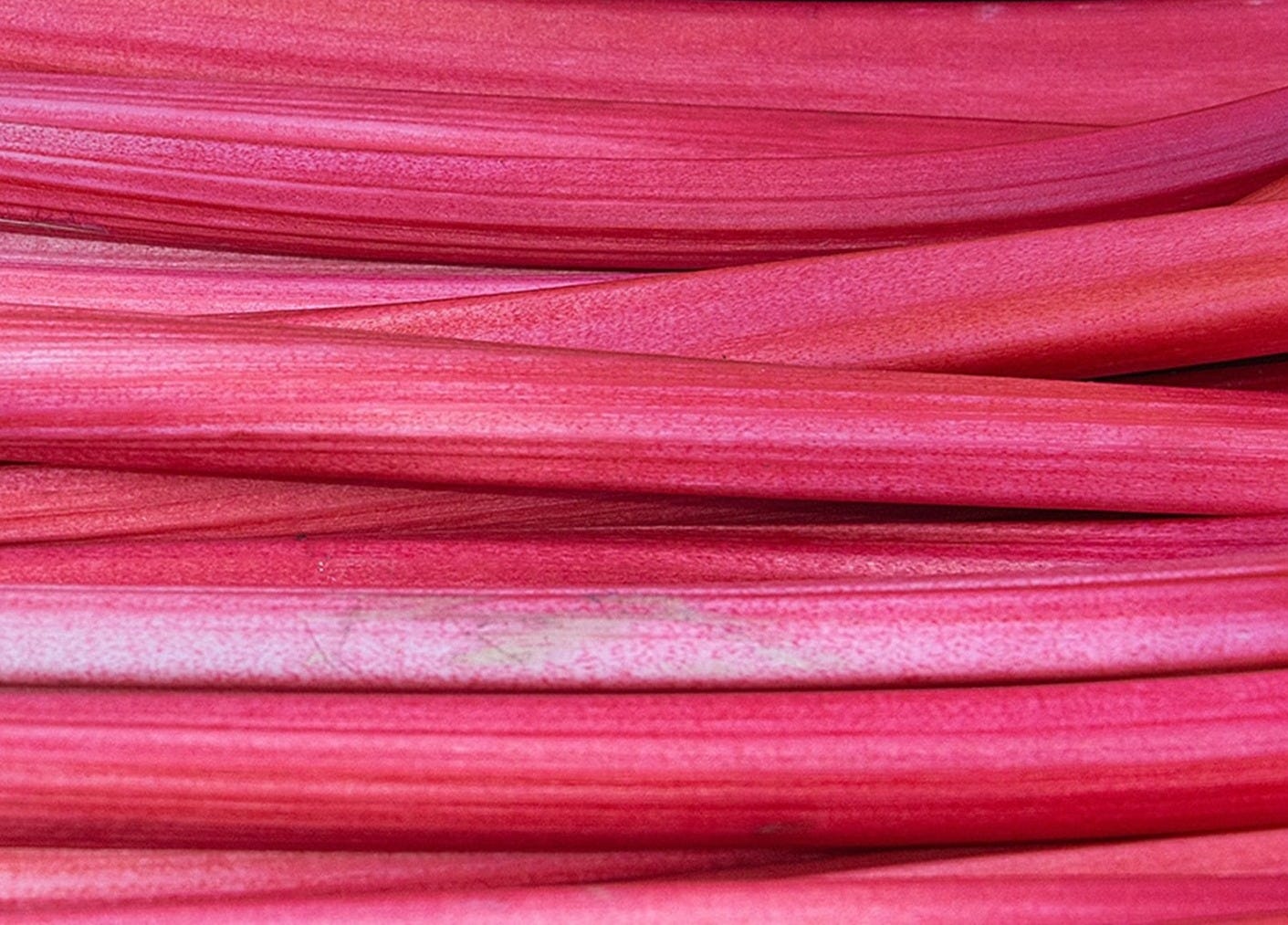
The technique is most famously associated with the Rhubarb Triangle in West Yorkshire, but it travelled easily across the Irish Sea, carried by gardeners, estate workers, and horticultural manuals. In the country houses and monastery gardens of the late 19th and early 20th century, rhubarb forcing became a small winter luxury, a way to produce freshness when little else stirred.
There is something almost wonderfully theatrical about this practice. The darkened shed. The candle. The quiet snap of a stalk pulled from the crown. One thinks of a kind of Beckettian light: illumination withheld, then granted in fragments. The plant grows in darkness, yet what we eat is colour itself.
Rhubarb and the Irish Sweet Tooth
In Ireland, rhubarb has long been aligned with the domestic. It appears in school dinners, in enamel pie dishes, in the kitchens of grandmothers who knew precisely how much sugar was required to soften its edge. It sits somewhere between austerity and indulgence: a fruit that is not a fruit, a winter crop that promises spring or even summer. In the Schools Collection, rhubarb is remembered in the form of jams, pies and cakes:
This is the way you would make in rhubarb cake. Make a plain cake and cut the rhubarb put sugar in it make two halves of the cake roll them with a rolling pin put grease on the oven pot put one half of the cake down in the oven pot and put the rhubarb on top of it. Put the other side of the cake down on top of the rhubarb. Make a hole in the top of the cake to let out the juice and bake it. Put the lid on the oven. Put cinders on top of the lid. Then put a sop or a bag on top of the lid (The Schools’ Collection, Volume 0579, Page 213).
Its sourness is its defining character. Before the heavy sweetness of imported fruits, before global strawberries in December, rhubarb offered contrast. It cut through cream. It sharpened custard. It gave structure to sugar. Rhubarb wine also features in a Co. Leitrim entry in the Schools Collection:
This is how rhubarb wine is made. First gather the rhubarb in the middle of May and wipe it with a wet cloth. When reduced to a pulp weigh it, and to every five lbs add one gallon of cold spring water let this remain for three days, stirring three or four times a day. Then put the wine into a cask and in a fortnight stop it down. If the wine should have lost any of its sweetness add a little more sugar. It will improve greatly by keeping and should have a brilliant colour (The Schools’ Collection, Volume 0200, Page 327).
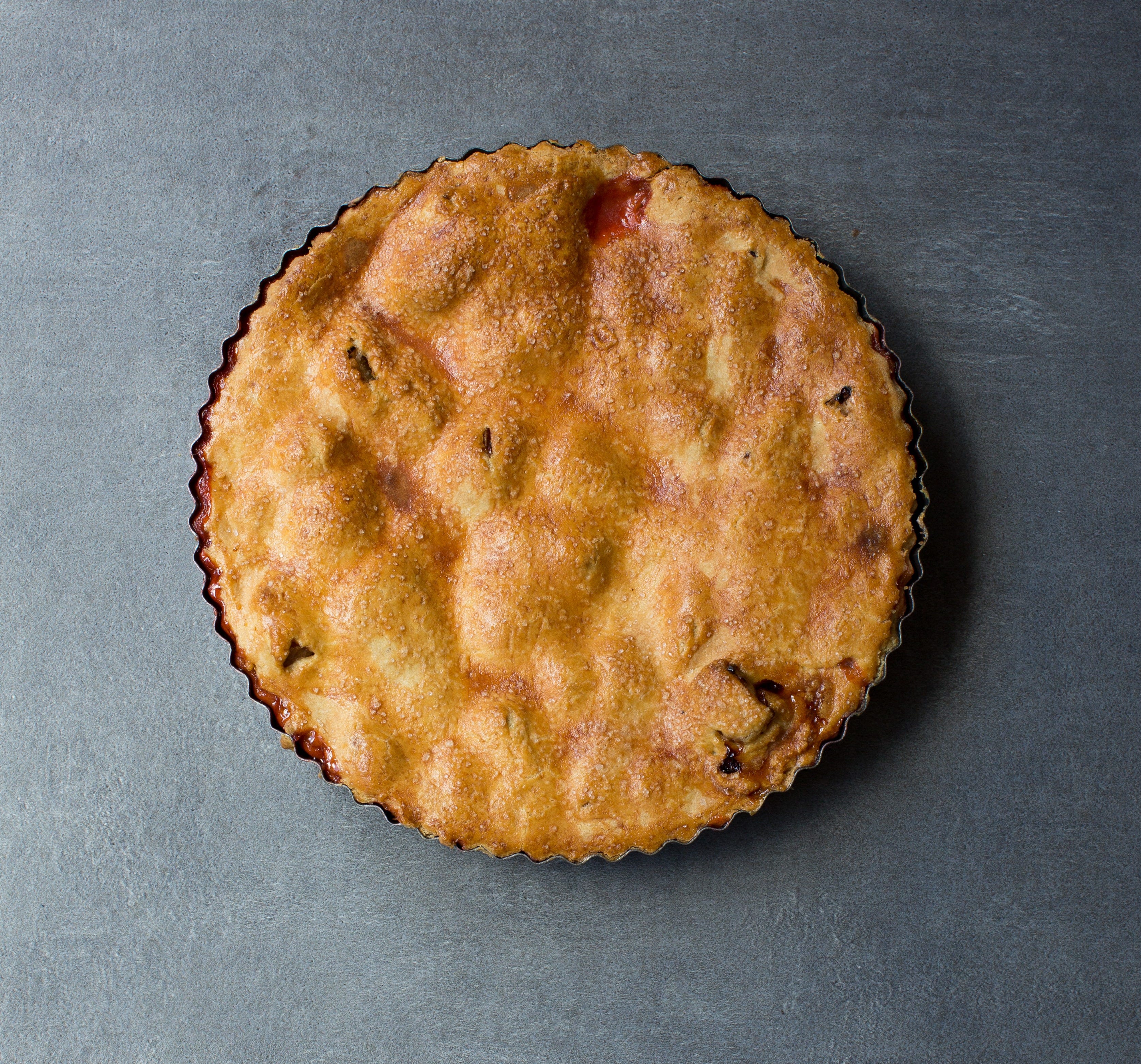
The tradition of pairing rhubarb with custard (most likely Bird’s instant custard, according to my mother) feels almost ecclesiastical, pink and yellow on a white plate, a small ceremony of colour at the end of a Sunday lunch. In some Irish households, rhubarb was simply stewed with sugar and perhaps a shard of ginger or orange peel; in others, it was baked beneath a rough crumble of butter, flour, and often oats for texture. There is a particular pleasure in way rhubarb collapses, the way the stalks surrender into a soft, blushing rose tinted compote. The more adventurous made strawberry and rhubarb tarts or upside down rhubarb and ginger cakes.
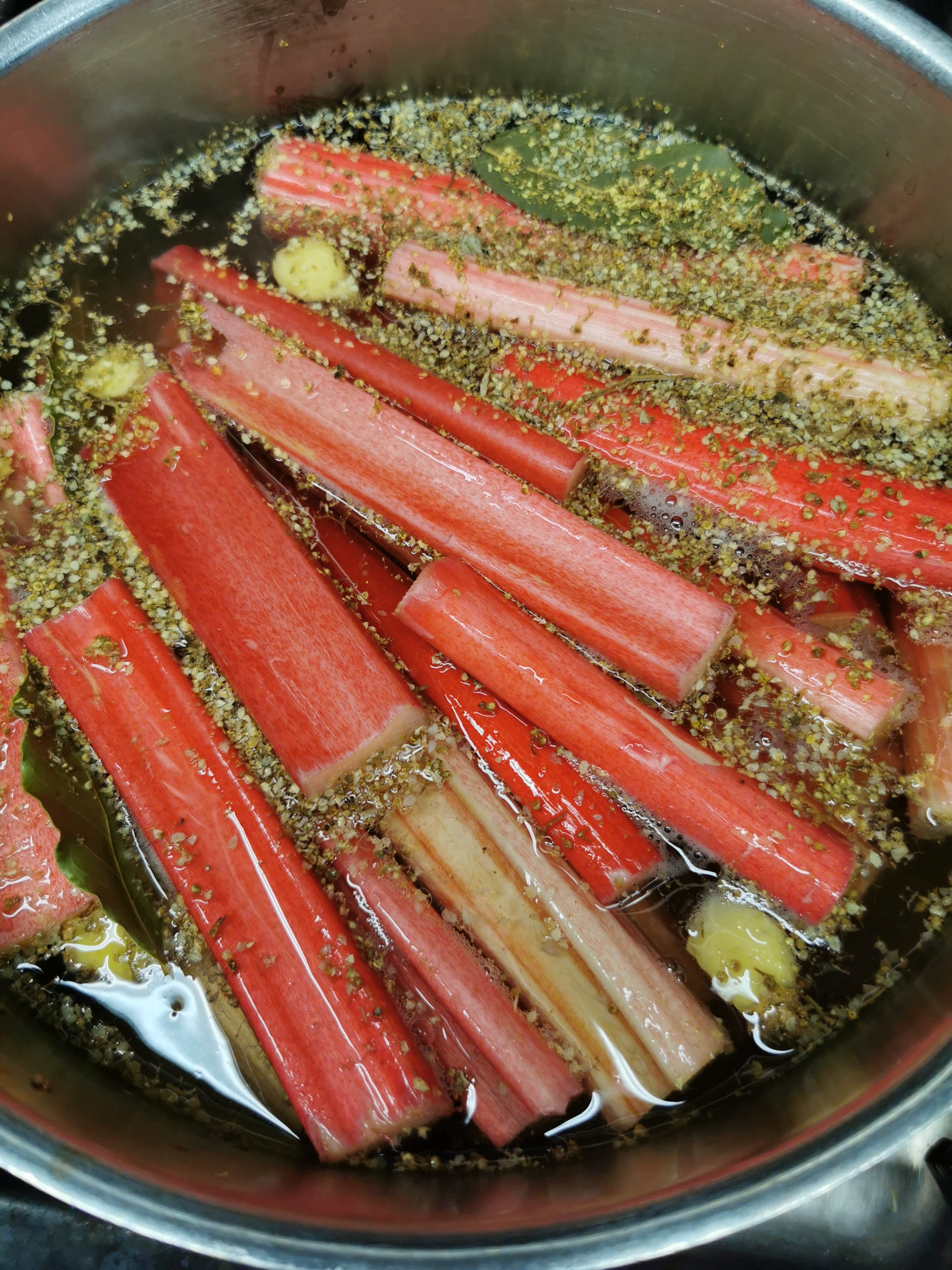
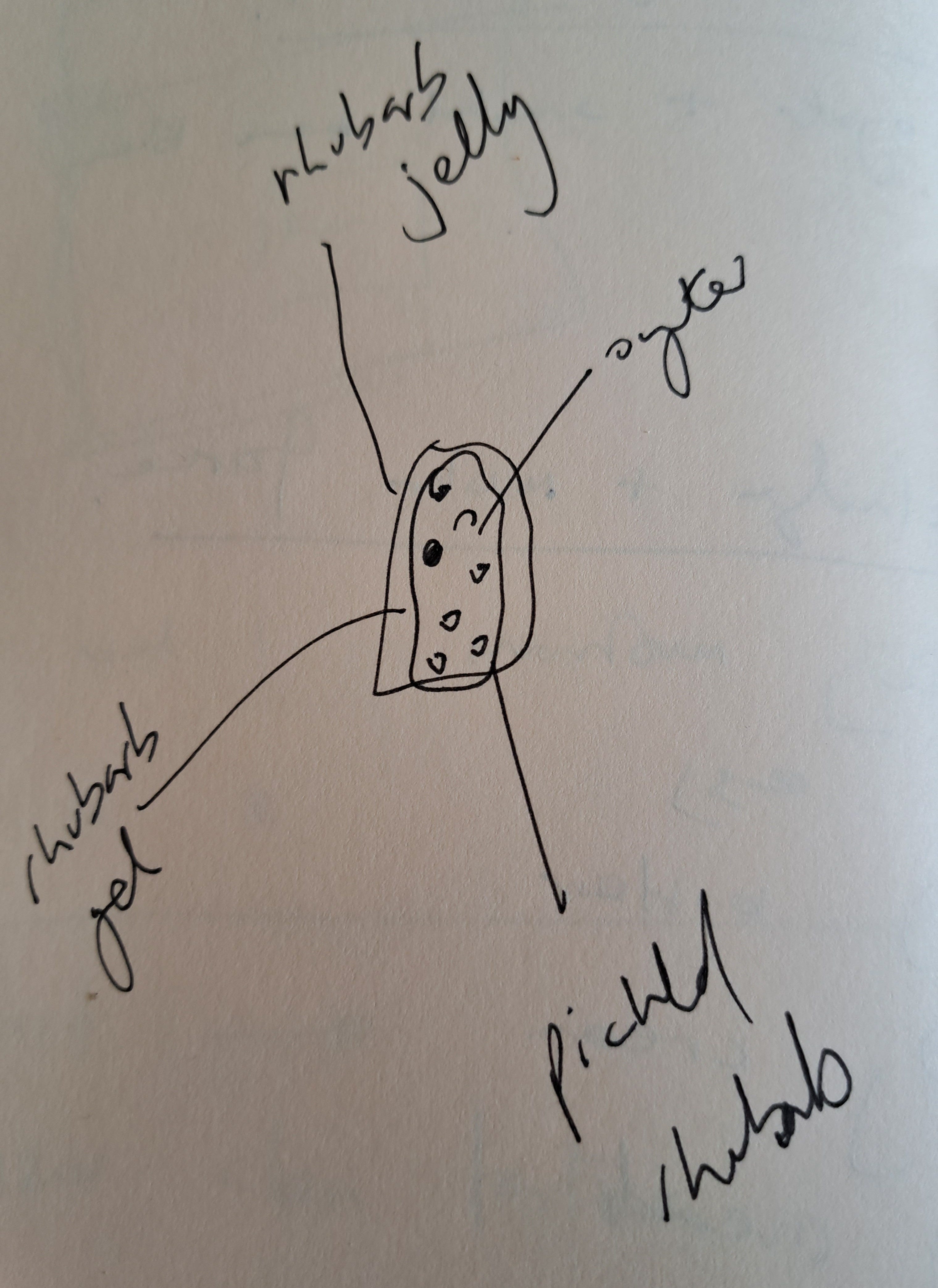
And yet, forced rhubarb changes the tone. Its flavour is more refined, less fibrous, with a brightness that borders on floral. It invites restraint. A spoon of crème fraîche. A ripple through yoghurt. Perfumed with dried wild roses, it offers a sharp counterpoint to oily fish such as mackerel and tuna, or even a pork chop on the bone. In recent years, chefs across Ireland have discovered its versatility, not only in desserts but in savoury dishes, where its acidity mirrors that of verjus or green apple. Rhubarb with crab, rhubarb with Aran Island shrimp, Rhubarb with whipped St. Tola goat’s cheese: I could go on.
Memory and Seasonality
What forced rhubarb teaches chefs is patience. It is not an ingredient of abundance but of timing, in two senses of the term. It belongs to January and February, to that quiet period after Christmas when the larder is thin and the days still short. It cooks quickly, unlike most winter vegetables. In a contemporary food culture dominated by the perpetual availability of all, its brief season feels almost radical.
There was a time when forced rhubarb appeared only once a year, marking the shift from winter to Lent. It preceded the wild garlic, the nettle, the first lamb. It was the hinge between seasons. Now, like so much else, it risks becoming background noise, available out of context, detached from frost and candlelight.
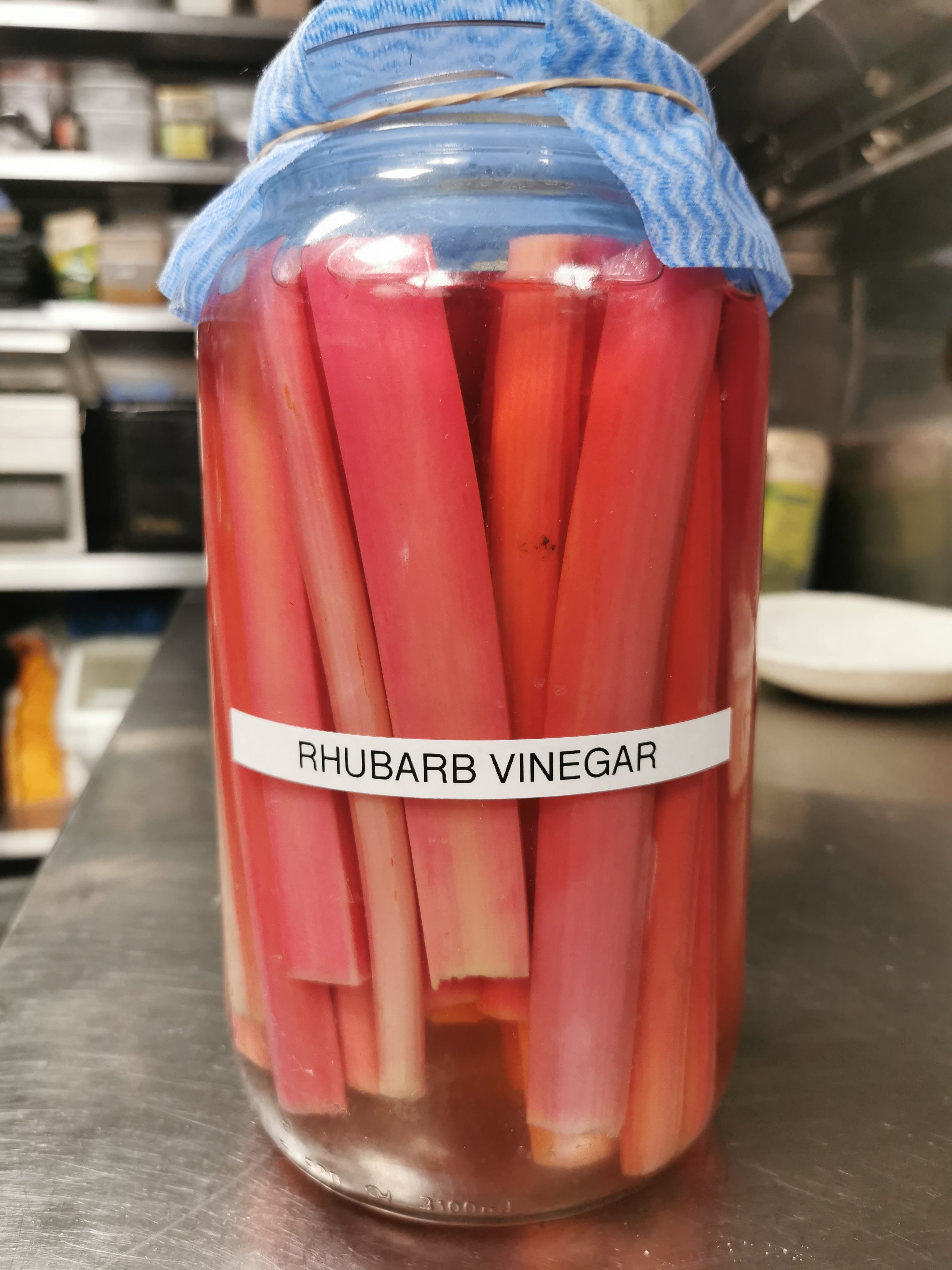
In my own kitchen, to cook forced rhubarb is to participate in a small yearly ritual. I take notice of its colour, its hue. I respect its sharpness. I avoid drowning it in sugar. I think about its pairing possibilities. I salt it, pickle it, ferment it, juice it, dehydrate it to make it chewy, powder it., turn it into ice-cream and sorbet (with dillisk, of course). There is a discipline in allowing its sourness to remain, a reminder that, like life, not everything must be sweetened to be enjoyed.
A Note on Leaves and Lore
Rhubarb leaves are toxic, containing oxalic acid in high concentrations. This fact has always lent the plant a certain danger. In times of scarcity, there are stories, particularly during the Second World War in Britain, of people falling ill after consuming the leaves. Whether apocryphal or documented, the tale underscores the plant’s dual nature. It is both nourishment and threat intertwined.
In Ireland, rhubarb is rarely found wild. It is a garden plant, inherited and divided. Crowns are passed between neighbours, planted beside sheds and compost heaps. It is a plant of continuity. Once established, it will return year after year, provided it is not exhausted by over-harvesting.
There is something reassuring in that persistence. In the dark of winter, beneath frost and soil, the crown waits. It gathers itself. And then, coaxed into darkness once more, it offers colour when colour is scarce.
Forced rhubarb is not simply an ingredient. It is an argument for seasonality, for restraint, for the quiet drama of growth unseen. In its pink and rose light, winter softens and the year begins again.
Yours in Irish food,
Jp.
23rd February, 2026
Loved this ‘ It is an argument for seasonality, for restraint, for the quiet drama of growth unseen. In its pink and rose light, winter softens and the year begins again.’
One of my favourite things brilliantly celebrated Jp, thank you