
Mellow Yellow
Gorse and Primrose flowers

There is a point in the Irish spring when yellow arrives before warmth does. Not the broad, settled yellow of summer, but something earlier and more uncertain: primroses low in the hedge-banks, and gorse blazing high across verges, boreens and the stony ground that surrounds the city. Together they make one of the oldest colour pairings in the Irish landscape. One is small, soft, almost domestic. The other is wild, armoured, and impossible to ignore. Neither is a major food in the old Irish sense. But both matter because they announce a change in the year.
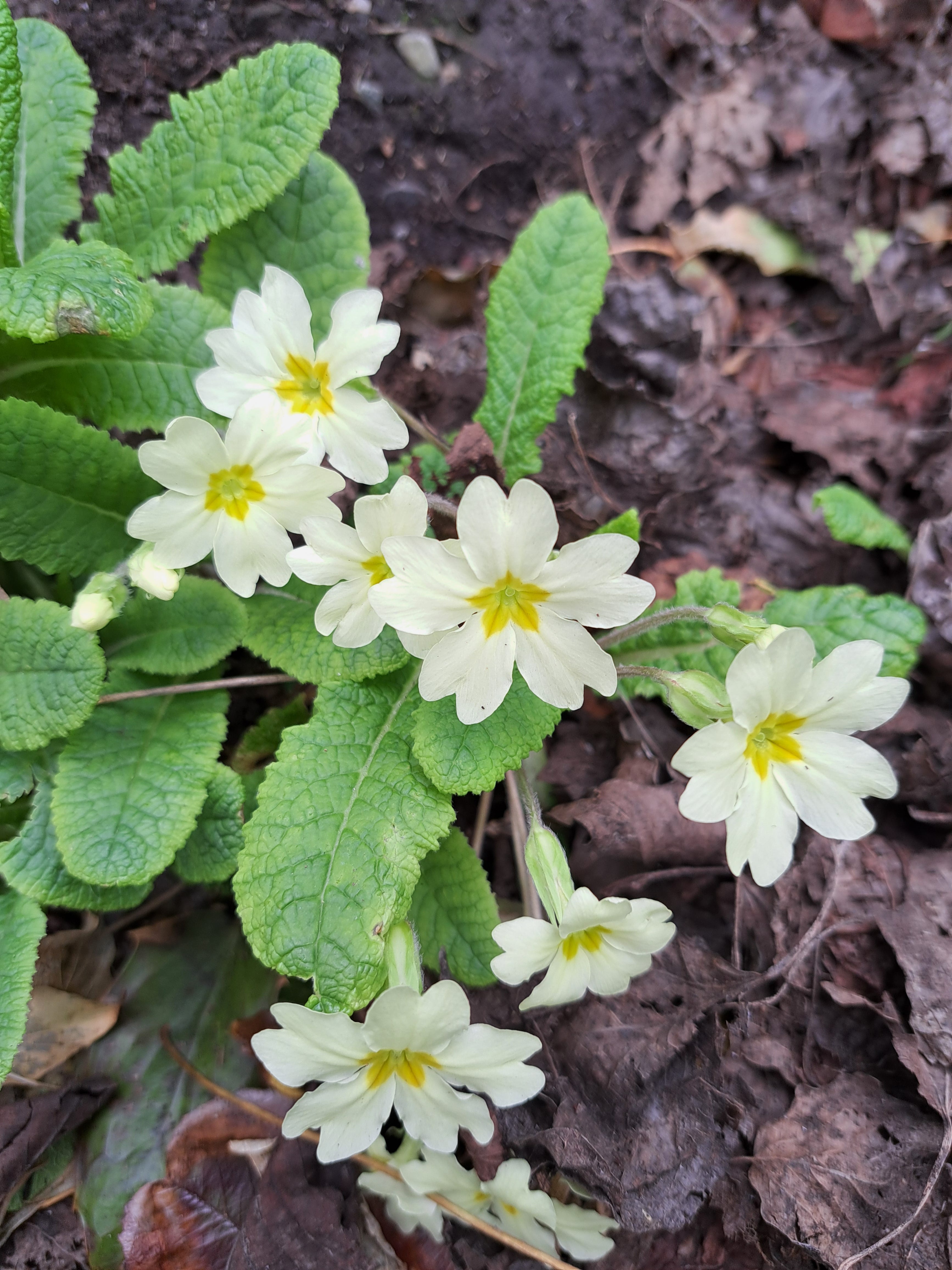
Primrose (Primula vulgaris) is among the gentlest signs of spring in Ireland. Teagasc describes it as part of our native Irish biodiversity and one of the flowers most widely recognised as marking the season’s return. It appears on south-facing banks, in hedgerows, woodland edges and sheltered grassy places, carrying that pale yellow flowers that seems less like a display and more like a reassurance that winter has finally passed. After months of mud, rain, roots, and bloody brassicas, primrose arrives almost as a form of sweet permission. A therapy, even. For farmers, it means the ground is opening up again and the eye can begin to trust the brightness in the sky.
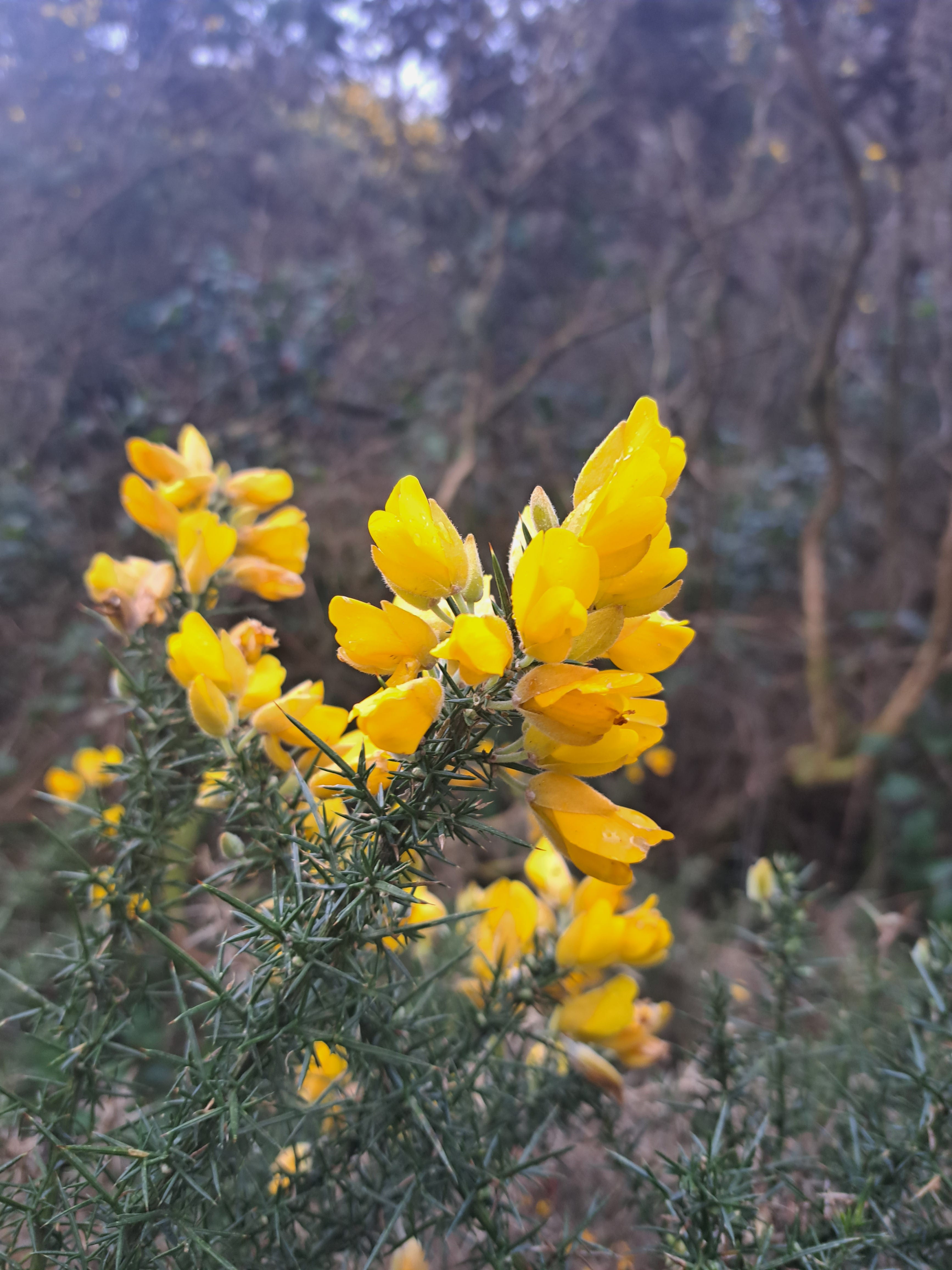
Gorse (Ulex europaeus) by contrast, does not so much arrive as boldly declare itself. Wildflowers of Ireland describes it as a remarkable native shrub whose yellow flowers light up the Irish landscape, especially from February to May, and notes the plant’s famous coconut-like scent when freshly picked. Anyone who has walked a road in the west of Ireland or along rougher upland edges in spring knows that smell: sweet and warm, oddly tropical, and drifting from something otherwise made almost entirely of thorn. Gorse is a plant of contradiction. It is fierce to touch but generous to smell and it’s visually extravagant even on the bleakest day.
In culinary terms, both plants sit at the edge of use rather than at the centre of the Irish country kitchen. The Royal Horticultural Society lists primrose flowers as edible, suitable for crystallising, using fresh on cakes, or freezing in ice cubes. That is useful to know, but it also tells us something about scale. Primrose belongs to the world of garnish, delicacy and the brief edible flourish, not to nourishment in any substantial sense. It is not a thing to gather heavily. Its value is partly symbolic and seasonal: to use a little is enough.
That same restraint should govern how we think about wild flowers generally in Aniar. Primrose matters not simply because it may be edible, but because it belongs to the ecology of early spring. It is a sign of the times. Teagasc notes its nectar is important for long-tongued bumblebees, bee-flies and butterflies, and specifically links primrose with the brimstone butterfly, which emerges from hibernation and feeds on it on sunny days. In other words, the first primrose is already spoken for. Before it becomes decoration, it is part of the annual reawakening of pollinating life. This is why it’s important to always leave until petals behind for the bees and other Irish insects.
In Irish folklore, primrose carries far more weight than its size would suggest. Dúchas preserves repeated references to it in May customs: primroses gathered for the May-bush, primroses placed outside the door, primroses bound up with ideas of luck, protection and the proper beginning of summer. One Schools’ Collection entry records that the May-bush outside the door was decorated with primroses, cowslips and bluebells.
There are many legends connected with the first day of May. It was customary long ago to place a May-bush outside the door and to decorate it with primroses, cowslips, bluebells, and other flowers to honour the month of May (The Schools’ Collection, Volume 0743, Page 334).
While May is still a while a way, we can appreciate the sentiment of May flowers, even though many of these flowers now arrive earlier in the year due to climate change. Another Dúchas May Day booklet preserves a Donegal tradition of decorating a rowan branch with may flowers and primroses and leaving it standing so that good luck would come through the year. These are not merely floral details. They show primrose as a threshold flower, brought deliberately to the boundary between house and world.
That threshold quality feels important. Primrose blooms low, close to the earth, and yet keeps appearing in traditions concerned with the passage of time: from winter to summer, from bad luck to good, from vulnerability to protection, it is there. It is easy to imagine why it has a hold on the Irish folkloric imagination. In a rural society attentive to signs, milk, weather, fertility, and the unseen risks of seasonal change, a small early flower could become more than itself. It could stand for the safe crossing into a better part of the year. It could signal a change in the quality of the milk. Not surprisingly, a folk cure from Roscommon survives in Dúchas: primrose boiled with new milk as a remedy for jaundice (The Schools’ Collection, Volume 0268, Page 231). Whether or not one takes the medicine seriously, the pairing is telling. Spring flowers and fresh milk are both emblems of renewal in the year in Ireland.
Gorse has a less domestic but no less deep place in the Irish imagination. It belongs to rough land, roadside banks and the untidy brilliance of the few remaining uncultivated places in our country. It is not hard to see why it has lasted so strongly in our memory and language. For many people in Ireland, gorse is one of the first plants that makes spring visible at a distance. Unlike primrose, you do not discover it by stooping. You see it on the hill before you and the dog come near it. If primrose is the intimate one, gorse is its theatrical brother: mad, bad, and dangerous to know.
Gorse has its practical uses in the rural economy. Folklore and local heritage sources record furze or gorse as useful for hedging, shelter and, when treated properly, fodder. This older practical Irish life matters because it reminds us that the Irish countryside did not divide plants neatly into beautiful and useful. A thing could be thorny, troublesome, fragrant, bright, and economically valuable all at once. Gorse was part of the working landscape before it became merely scenic to a hoard of ecologically minded tourists of the picturesque and the sublime.
As food, gorse and primrose are best understood not as ingredients of substance but as ingredients of the season. Primrose petals may be scattered sparingly through sugar, set into a dessert, or used in the old fashioned style of crystallised flowers for birthday cakes. Gorse flowers, where carefully and lightly used, are more likely to enter the kitchen through their scent than flavour: infused into syrup, cream, vinegar, wine or tea. They carry a fleeting coconut note that feels almost unbelievable in the Irish spring. As both plants ask for a little delicacy, to overuse them would be to miss the point of these tiny things.
What they really offer the food calendar is not sustenance but sequence. They remind us that the Irish year was once read through simple signs long before it was managed by supermarket abundance. The first primrose under the ditch in Knocknacara and the sudden yellow of gorse in Cappagh Park, tell us that winter is loosening. They belong to the hungry gap not because they fill it, but because they soften its edges. They are among the first wild notices that another season is on its way.
Wild flowers rarely become ingredients of substance in the contemporary Irish kitchen. Though they sometimes leave a small trace in the kitchen. The key is mindfulness and restraint. These are not harvest crops but seasonal gestures, a way of bringing the outside briefly to the table at Aniar, to show out customers that the Irish spring has finally come.
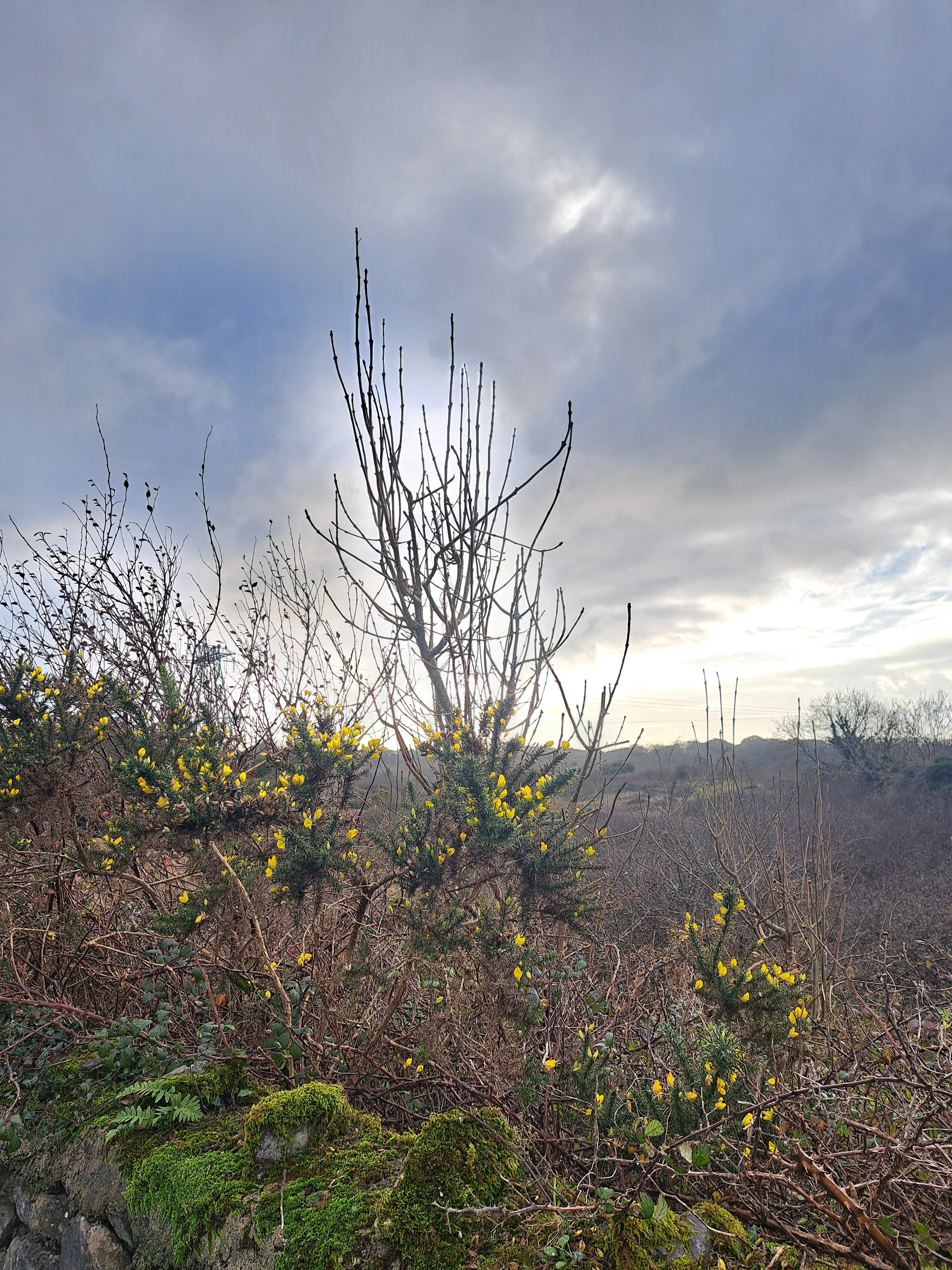
In truth, neither gorse nor primrose flowers exist to feed us. They arrive too early, too lightly, and too beautifully for all that. Their work in the Irish food calendar is different. They soften the hungry gap. They offer colour and warmth, and the first small suggestion that the land has begun to move again. A primrose under a hedge or a sudden blaze of gorse along a roadside can change the mood of a day in early March. They remind us that food does not begin only in the kitchen or the field, but in the slow reawakening of the landscape itself. Before lamb, before the first true greens, there is simply this: yellow returning to the land.
Yours in Irish food,
Jp.
10th March, 2026.