
For Bertrand Grébaut
Grief and influence

Cher Bertrand,
I only met you once.
That is a strange thing to say about grief, or about influence. We imagine that influence comes from intimacy, from long conversations, from shared kitchens, from years of proximity.
Sometimes it does.
But sometimes it comes from a single encounter. The way someone speaks. The way they hold themselves. The way they talk about food not as a career or a product, but as a way of being in the world. The way they posit hospitality as both and a family and an art form.
That is what I remember most about Bertrand Grébaut.
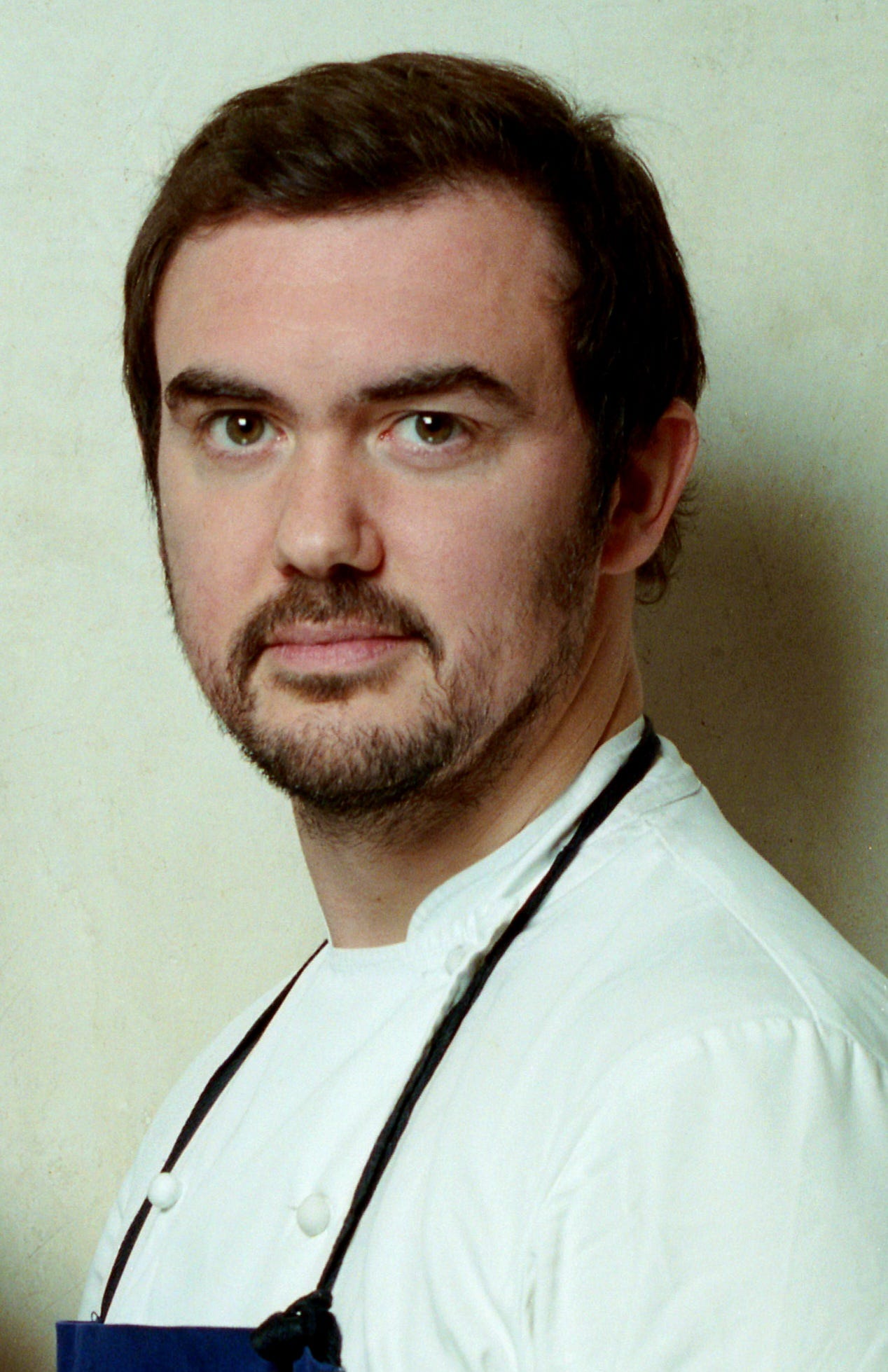
Bertrand died on the 2nd of July 2026, at the age of forty-four. His death was announced this morning (4th July) by his friend and long-time business partner Théophile Pourriat, with whom he built Septime and many other places in Paris. Since that announcement many people have rightly written about the restaurant, the awards, the influence, the way Septime changed the language of contemporary French fine dining. It opened in 2011 in the 11th arrondissement and became one of those rare restaurants that seemed to alter the atmosphere around it, and even those restaurants far away. It was a serious place without being solemn. It was beautiful without being overtly precious about its presentation.
But this is not an obituary.
Others knew Bertrand better than I. Others worked beside him, ate with him, loved him, built with him. This is only a small note from someone who met him once in a farm in Dublin and nevertheless felt the charge of that meeting.
Bertrand spoke at Food on the Edge in 2021. He came to Dublin, to the Airfield Estate in Dundrum, to speak not only about cooking but about a philosophy of food that permeated through his businesses.
Food on the Edge has always been built around that idea: that food is not merely what happens on the plate, but what happens before and after it. From the soil to the sea, from the worker to the guest, from the politics to the art. Bertrand understood all this deeply. His work at Septime, Clamato, Septime La Cave, D’Une Île and Tapisserie was not simply expansion. It was the creation of an ecosystem: restaurant, wine, pastry and people.
What struck me most was his enthusiasm.
It was not a loud enthusiasm. It was not performative. It was not the kind we often mistake for passion in the ego-driven restaurant world, where intensity can become another word for toxicity. Bertrand’s enthusiasm was quieter, smaller and more exact. It came from his attention to details. He had the air of someone who believed food, especially fish and vegetables, could still be renewed everyday, that a restaurant could still be a place of experiment, generosity and collective life.
That matters.
It is why I still go to work every day. Without passion for food, for creativity, for expérimentation, there is nothing.
Restaurants can harden you.
They can make you cynical.
The daily work is repetitive, physical, and often punishing, on friends, on family, on your own broken body.
There are the constant bills. Staff always leaving at crucial times. Reviews distorting your work for clicks.
The industry asks us to become brands when most of us became cooks because we were interested in the opposite: touch, taste, craft, the unrepeatable moment of cooking a courgette.
What Bertrand seemed to offer was a way through that.
It was not escape, but rather a kind of clarity.
At Aniar, we have always tried to cook from where we are. From the Atlantic edge. From Galway.
From seaweed and wild herbs, to preserves and ferments, we have tried to make an Irish restaurant that is not nostalgic about a fake past, but rather alive to the seasons and shellfish that surround it.
Aniar is a restaurant that understands the past as something active, something still fermenting everyday.
Bertrand’s way of thinking helped me affirm that instinct. It gave confidence in times of doubt. He showed me that a restaurant could be contemporary without severing itself from place. It could serve it staff as well as its customers.
It could be informal without losing gravity or depth.
It could be ingredient led without becoming pompous.
It could be intellectual without becoming cold.
At our café and wine bar Tartare (which sadly closed after Covid), there was also a strong influence. The idea that casual food did not have to mean careless food. That wine, bread, vegetables, fish, pickles, ferments, and the everyday gestures of eating could carry as much meaning as a tasting menu. That small plates didn't just mean something trendy but rather a philosophy of eating in our contemporary world. That the democratic restaurant, the informal restaurant, the place open to the all could still have a philosophy of hospitality and happiness.
This, for me, is part of Bertrand’s legacy: he made seriousness feel light, made it smile.
That is not easy.
Anyone can make food heavy and serious. Anyone can attach words like ‘classic’ to a dish to justify what they do. Anyone can turn a restaurant into theatre or self-mythologise about his or her own importance.
It is much harder to create a place where the food feels free, where the room breathes, and where the staff and guests are part of the meaning of the place.
That was the gist of his talk in 2021.
Staff are family.
Le Fooding wrote of him not as a monument but rather as a movement. That feels right to me. A monument is a fixed thing. A movement continues. Rolls on. It enters other kitchens, other restaurants around the world.
It changes the way a chef sees a vegetable, treats a commis, chooses a plate, speaks to a farmer, or opens a bottle of wine without the pedantic manners of a old fashioned sommelier.
It changes the way we imagine what a restaurant can be.
When I think of Bertrand now, I think not only of Septime, but of all the restaurants that came after it, knowingly or unknowingly carrying some part of its spirit.
Restaurants where the table is bare, the wine is alive, the vegetables are not an afterthought, the service is human, the cooking is precise but not imprisoned by tradition.
Restaurants that understand that hospitality is not luxury or for the better off. It is attention to detail.
I only met you once.
It was enough. Enough to feel the warmth of another person’s conviction. Enough to be reminded that food is still worth thinking about. Enough to carry something home to Galway and let it settle into our own kitchens, our own landscape, our own way of cooking.
There is a great sadness inside in losing someone so young, especially someone whose work still felt unfinished.
But all meaningful work is unfinished.
That is what makes it meaningful.
The best restaurants are never complete. They are always evolving.
They continue through the people who visit them.
They continue through the people who stood at the edge of his dining room and thought: Yes, food can be this like too.
Thank you, Bertrand.
For your enthusiasm.
For your freedom.
For your bravery.
For the reminder that a restaurant can be a philosophy made edible.
Yours, Jp.
4th July, 2026
As an Irish chef now taken a different path , thanks, JP, for a moving tribute and to honour Bertrand, whose gentle, sincere way of cooking has influenced my own path.
Very well put JPVery well put.