
Caraway Seeds
The spice of Cake and Concealment

Caraway is one of those flavours that seems to belong and not belong to Irish food culture. It is there in the Irish pantry, in old seed cakes, breads, biscuits for cheese boards, located in perpetuity beside the mixed spice, the cloves, and the cinnamon.
Yet it never feels native in the way that sorrel, nettle, and seaweed do. When placed between wild garlic and meadowsweet it seems as foreign as a fried taco.
It is a spice in Ireland, but it is not an Irish spice. It came from elsewhere, entered our 19th cupboards, settled into the cake tin, and gradually became part of the taste of home through the 20th century. It was domesticed by the many women who baked each day in their tiny cottage kitchens.
The “seed” of the caraway is not really a seed at all. It is rather the dried fruit of the caraway plant. It is small and ridged and looks like cumin’s darker and thinner cousin. Though its flavour is quite different. Caraway screams of exotic islands, of aniseed and orange peel, a bitter pepper dancing upon the tongue. There is something medicinal and old-fashioned about it and perhaps this is why it's flavour has fallen out of fashion.
Caraway belongs to the carrot family, along with fennel, dill, coriander, parsley and cumin. Like many of those plants it carries within it both the possibility of use in the kitchen and as well as a cure. It is aromatic enough to season bread and strong enough to linger on the breath when sucked.
In Ireland, caraway’s most familiar appearance is in seed cake. This is one of the forgotten cakes of the old Irish kitchen, made simply with some caraway seeds folded through a regular cake batter. It is not your great aunts coffee cake. It does not announce itself with cream or icing or even fruit. It is plainer again, made for cups of tea rather than celebration . It belongs to the distant world of visitors on sunday afternoons, of women who baked without making a performance of their baking for the whole street to see.
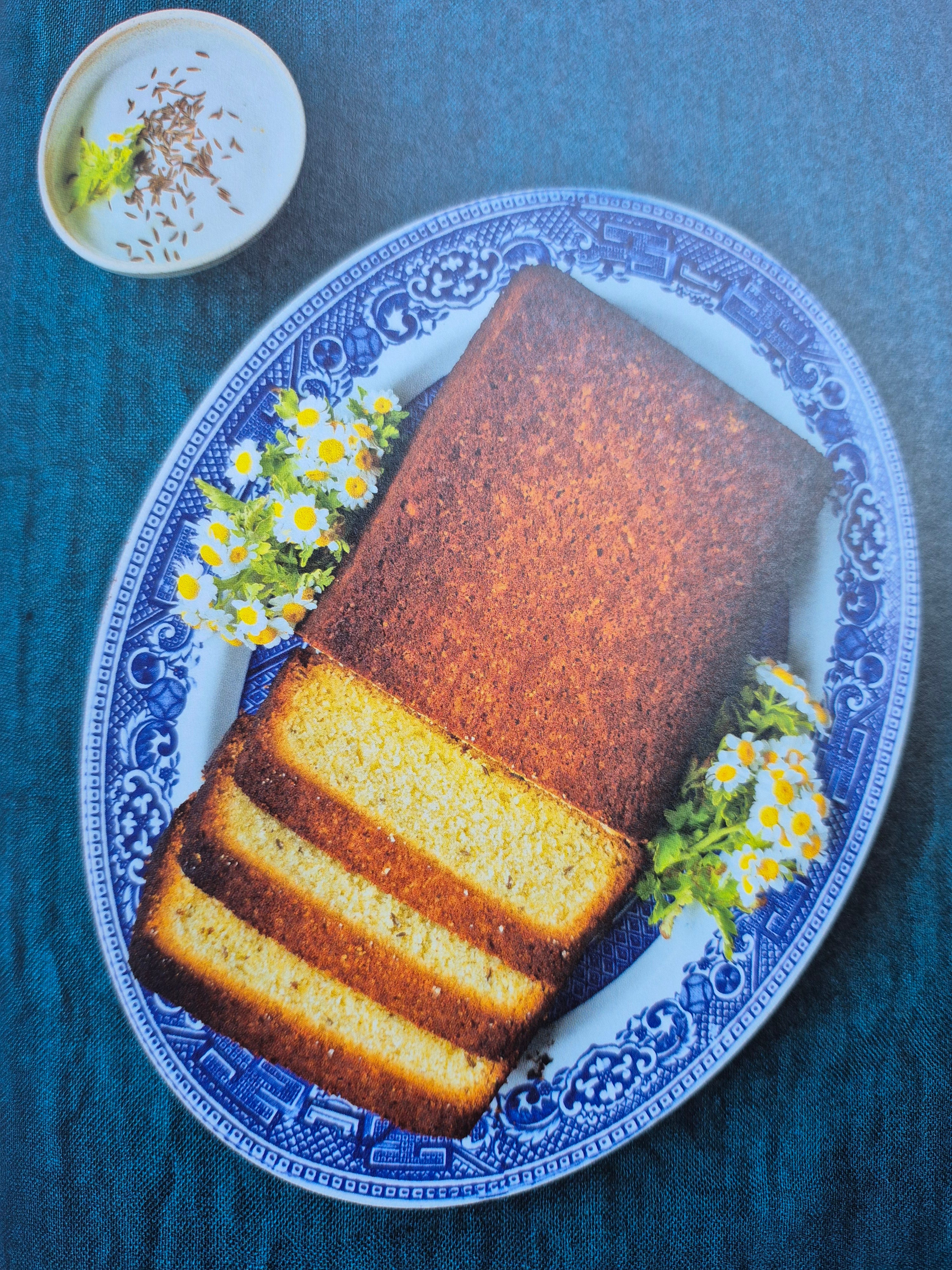
From the 19th century onwards seed cake travelled through the neighbouring food culture of Britain and finally became one of those adopted things in Ireland that lost its foreignness through every day repetition. This is often how food culture works. Often there is no grand plan. It's often a woman baking in the kitchen that makes the change.
An ingredient arrives to Ireland by trade or empire, class or fashion, medicine or religion. Or just by bloody accident. At first it is exotic and rare. Exclusive, even. Then it becomes widespread and ordinary. Ignored. Finally, for us, it becomes nostalgic. We race back to it, trying to recover a past we were not witness to, in order, if only, to bolster our present precarious identity.
We forget the journey, the thousands of baked loaves and remember only the taste. Caraway is not native in the narrow sense, but many Irish foods are not native in that sense. Tea is not native. Sugar is not native. Cinnamon, pepper, cloves, coffee, oranges, raisins and currants are not native. Yet they have shaped Irish memory. The Irish kitchen has always been more porous than the nationalist imagination allows.
Caraway also belongs to bread. In parts of Europe it is married to rye, cabbage, pork, cheese and even spirits. In Irish and Irish-American baking it sometimes appears in soda bread, though this is not the plain soda bread of coarse wheat flour and buttermilk. It is a richer, more festive loaf, often with raisins or currants, closer to a cake than a bread.
Caraway has a particular affinity with dairy and fermentation: butter, buttermilk, cheese, sour cabbage, cured meat, pickles. Its strong aroma cuts through fat. It brings brightness to the often brown and the sour of Irish food.
Caraway also has another, darker side in Irish life. James Joyce catches it perfectly in “Counterparts” in Dubliners (1914). Farrington, trapped in his dark and muggy office, angry and humiliated, slips out to O’Neill’s pub for a porter. He drinks it quickly and asks for a caraway seed before returning to work. It is a tiny detail, but Joyce’s details are never insignificant.
The seed is not there for flavour. It is there to disguise, to coneal. In those days, Caraway was chewed to mask the smell of alcohol on the breath. Especially for day time drinkers.
In that moment, the spice moves from cake to concealment. It becomes part of the social choreography of drink: the quick glass, the dark snug, the penny on the counter, the breath disguised, the return to labour and the little lie carried back in the mouth of the employee.
That is what makes caraway interesting for us in Ireland. It sits between domestic respectability and public shame. In seed cake it perfumes the parlour. In Dubliners, it covers the evidence of the pub. In one context it is a form of hospitality, in another it is secrecy. It is the taste of tea and the smell of porter hidden from an employer. It is a spice of politeness and evasion.
There is something very Irish in that doubleness. Of course, food and drink in Ireland have often carried moral weight. Bread, butter, tea and cake belong to order. Porter, whiskey and stout belong to sociability, but also to anxiety. They belong to work missed and damaged masculinity.
Joyce understood that Ireland’s food and drink culture was never simply about nourishment. It was about class and control, performance as well paralysis.
Farrington’s caraway seed is almost comic. He thinks he is hiding the drink, but Joyce lets us smell the whole life around it.
It is also tragic.
Joyce returns to seedcake in Ulysses (1922) but there it has moved from concealment into intimacy.
In Molly Bloom’s final monologue, she remembers Howth Head and the moment when she gave Bloom “the bit of seedcake out of my mouth”. It is one of the great erotic food moments in Irish and world literature.
It is cake as courtship and consent, and bodily closeness between lovers. If Farrington’s caraway seed in “Counterparts” is used to hide porter on the breath, Molly’s seedcake does the opposite.
It makes the mouth visible.
It turns flavour into a secret touch.
The same aromatic spice that can disguise shame in Dubliners becomes, in Ulysses, a seed of desire and recollection. There it is a foreign flavour fully absorbed into the private mythology of Dublin life.
The seed itself becomes a kind of witness to the hidden side of Irish life.
Sex, seedcake and alcohol.
In essence, Caraway testifies to the imported nature of taste of much of food in Ireland, to the old folk medicinal uses of spices, to the habits of baking and the small strategies people used to survive work.
It reminds us that Irish food history is not only about great famines and Celtic feasts.
It is also about little moments of modern life.
It is about what was sprinkled into a cake, what was chewed before going back to the mundanity of office work in the early modern period.
At Aniar, we don't treat caraway as nostalgia but as a historical flavour to acknowledge our diverse food past. Toasted, it becomes warmer and nuttier, for use in fennel crackers for cheese. Ground, it becomes more forceful in food and is better paired with stout or whiskey in cakes and sauces for game, such as venison or pigeon.
Caraway is therefore a small spice with a large cultural shadow. It tells us that Irish food is not pure and never was. That is a myth. It is borrowed and traded, adapted. A seed in a cake. A seed after porter. A seed on the breath of a man trying to pass as sober. A foreign flavour made intimate by use in a romantic situation, on top of a hill, looking out over Dublin Bay.
Yours in Irish food,
Jp.
15th July, 2026.
The line about the Irish kitchen being more porous than the nationalist imagination could have been written about Brazil word for word.
We treat cumin as if it grew in our backyards. It arrived with trade the same way your caraway did, and no one at a family table would ever call it foreign.
Fascinating insight into the caraway seed, Jp. Who knew? Brilliantly written as ever.